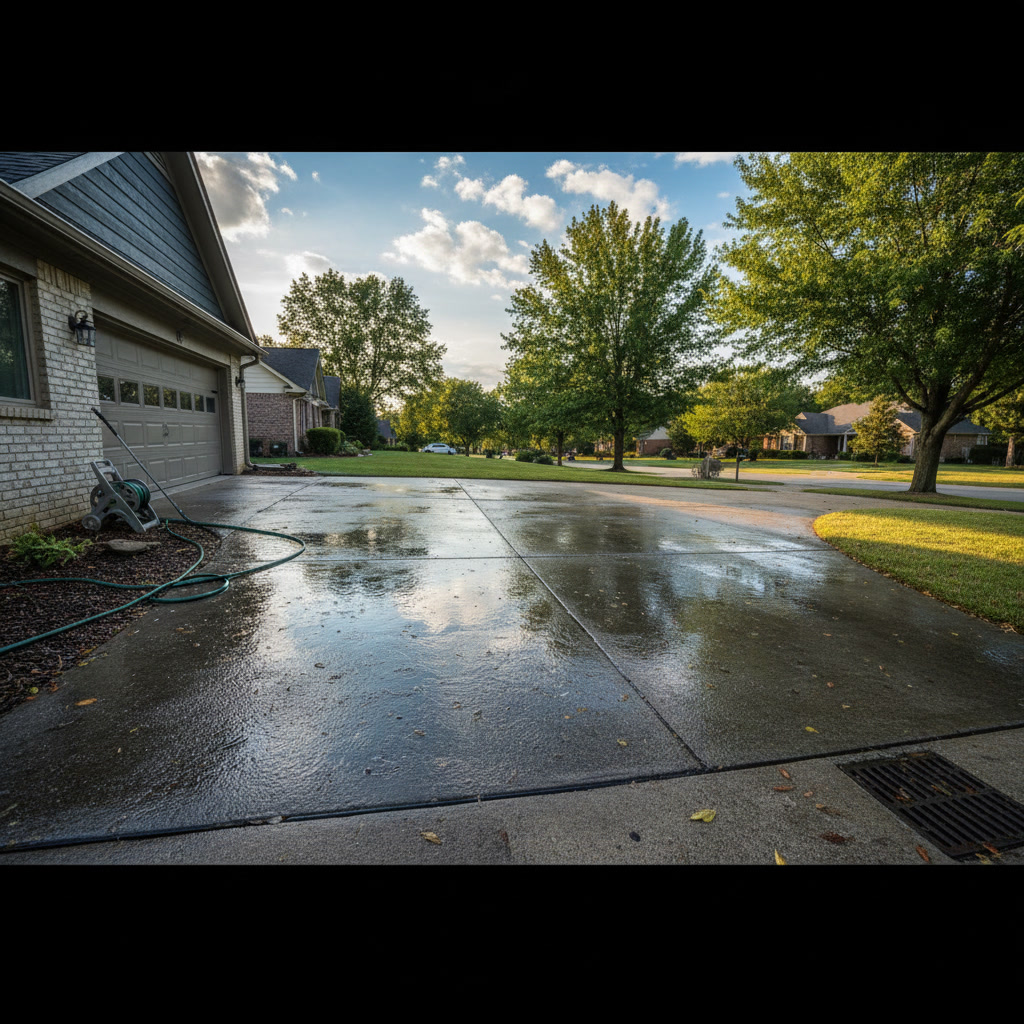
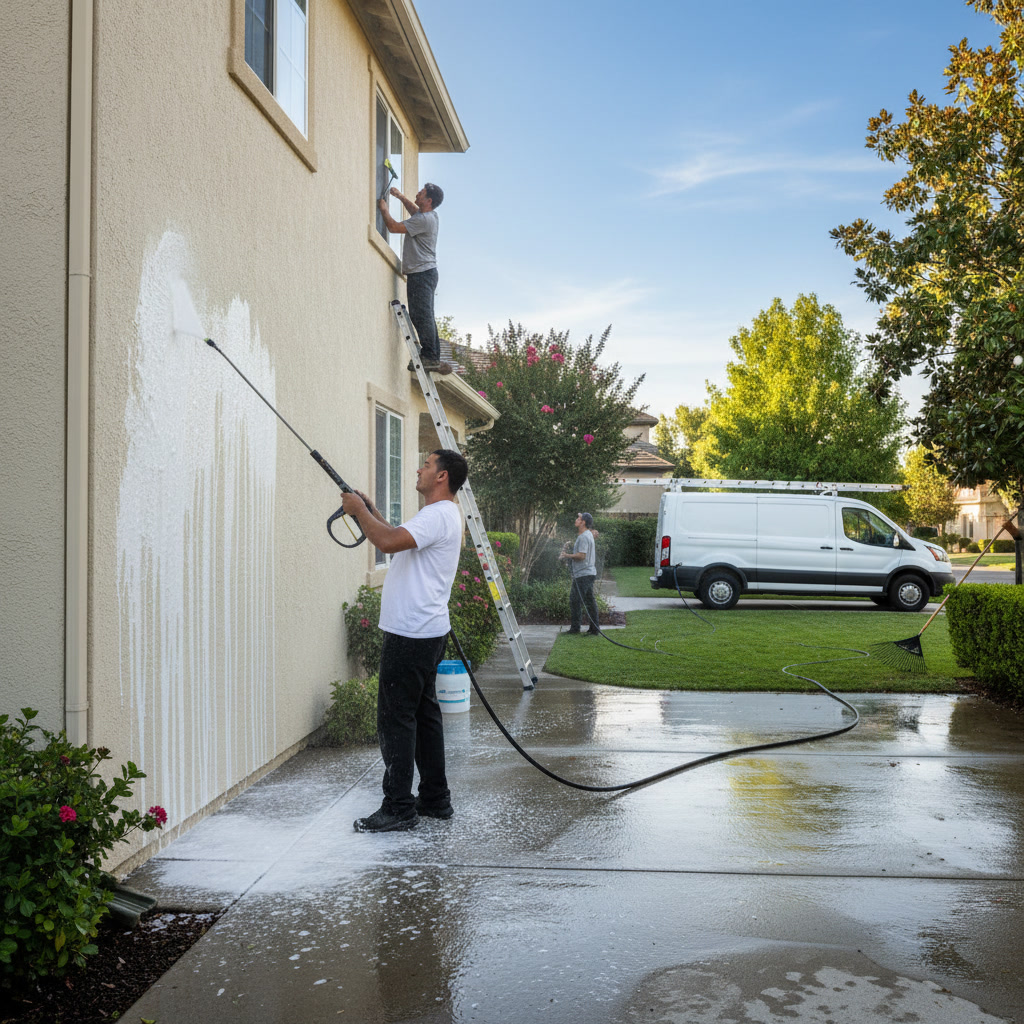
A driveway wet after cleaning often stays damp much longer than homeowners expect, sometimes for several hours or even a full day after the crew has left. This extended moisture is not a sign of poor workmanship or incomplete drying. Instead, it reflects how softwashing treats concrete at a chemical level, reaching deeper into the porous surface than traditional pressure washing. The cleaning solutions break down organic growth, oils, and stains below the surface, and that subsurface saturation takes time to evaporate naturally.
When you notice your driveway remaining wet well after the cleaning crew has packed up, it means the treatment has penetrated the concrete properly. Concrete is not a sealed, impermeable surface. It is porous, with tiny channels and pores that absorb water, cleaning agents, and contaminants. A true softwash process floods these pores with low-pressure cleaning solution, killing algae, mold, and mildew at the root rather than simply blasting the surface layer.
How Concrete Absorbs and Holds Moisture
Concrete driveways are made from a mixture of cement, aggregates, sand, and water. As the mixture cures, microscopic channels form throughout the slab. These pores allow moisture to move in and out of the material. When rain falls or a cleaning solution is applied, water seeps into these channels. The deeper the saturation, the longer it takes for that moisture to evaporate back to the surface and into the air.
Older driveways tend to hold moisture longer because years of wear, weathering, and minor cracking create additional pathways for water penetration. A brand-new driveway with a tight, dense surface may dry faster, but even new concrete is porous enough to retain moisture for extended periods after thorough cleaning.
The Science Behind Softwashing and Surface Saturation
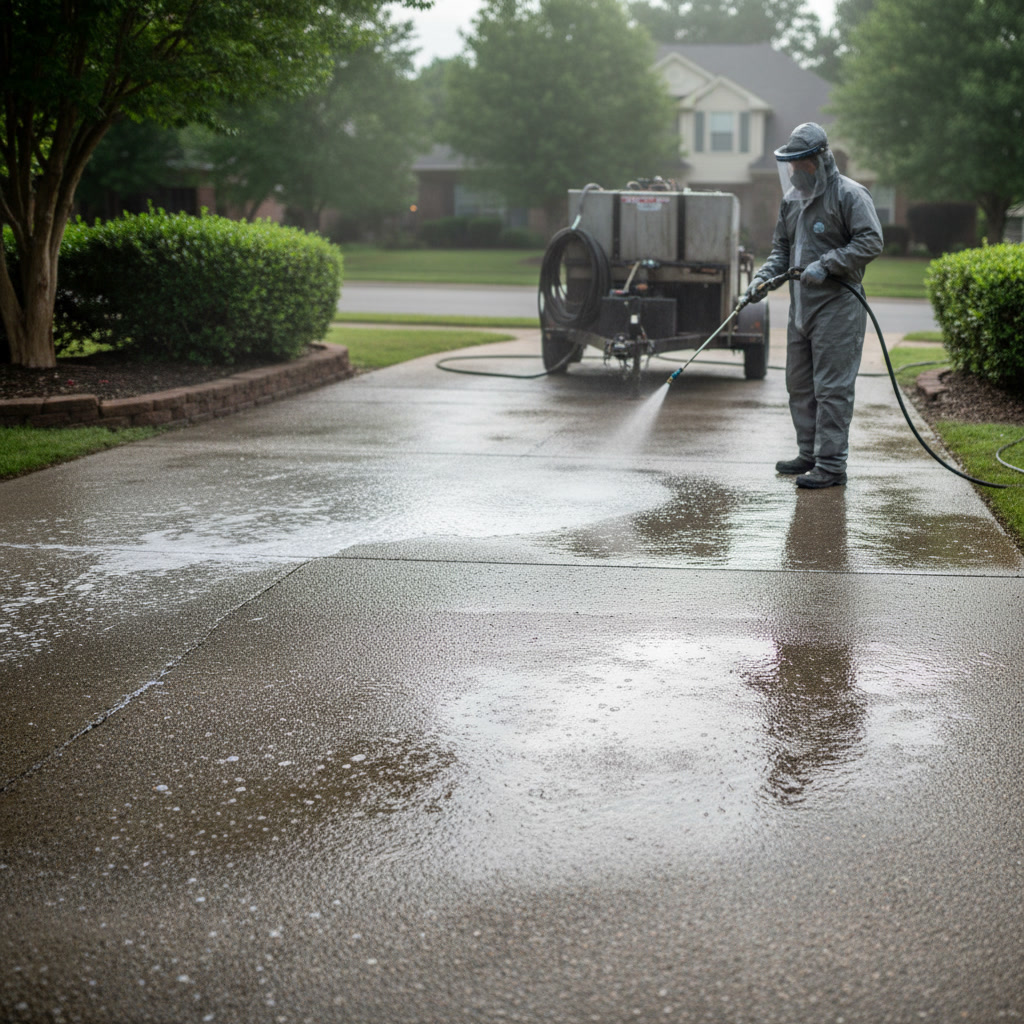
Softwashing relies on biodegradable surfactants, sodium hypochlorite, and water applied at low pressure, typically under 500 PSI. This gentle application allows the cleaning solution to dwell on the surface and soak into the pores rather than ricocheting off at high speed. The surfactants reduce surface tension, helping the solution spread evenly and penetrate deeper.
Once inside the concrete, the active ingredients break down organic matter, oils, tannins, and other stains. This chemical action continues even after the visible water on the surface has been rinsed away. The subsurface remains saturated, and that moisture slowly migrates upward as it evaporates. This process can take anywhere from four to 24 hours depending on temperature, humidity, sunlight, and airflow.
Why Traditional Pressure Washing Dries Faster
High-pressure washing uses mechanical force to strip away dirt, algae, and surface stains. Water is blasted at 2,000 to 4,000 PSI, which removes the top layer of contaminants but does not necessarily penetrate deep into the concrete. Because less water is absorbed into the pores, the surface dries faster. However, this speed comes at a cost.
Pressure washing often leaves behind live algae and mold spores embedded below the surface. Within weeks or months, that growth returns. The high pressure can also etch or damage the concrete, particularly if the operator is inexperienced. Choosing between pressure washing and softwashing depends on whether you prioritize quick drying or long-term results.
What Extended Wetness Tells You About the Quality of Your Clean in Orlando
If your driveway in Orlando remains wet for several hours after a professional softwash, that is a positive indicator. It means the cleaning solution has reached the subsurface layers where mold, algae, and bacteria thrive. Florida’s humid subtropical climate creates ideal conditions for organic growth, and surface-only cleaning simply does not last.
A driveway that dries within 30 minutes after cleaning has likely only been rinsed, not treated. True softwashing saturates the concrete, and that saturation is what delivers months of algae-free results. The extended drying time is the trade-off for a deeper, longer-lasting clean.
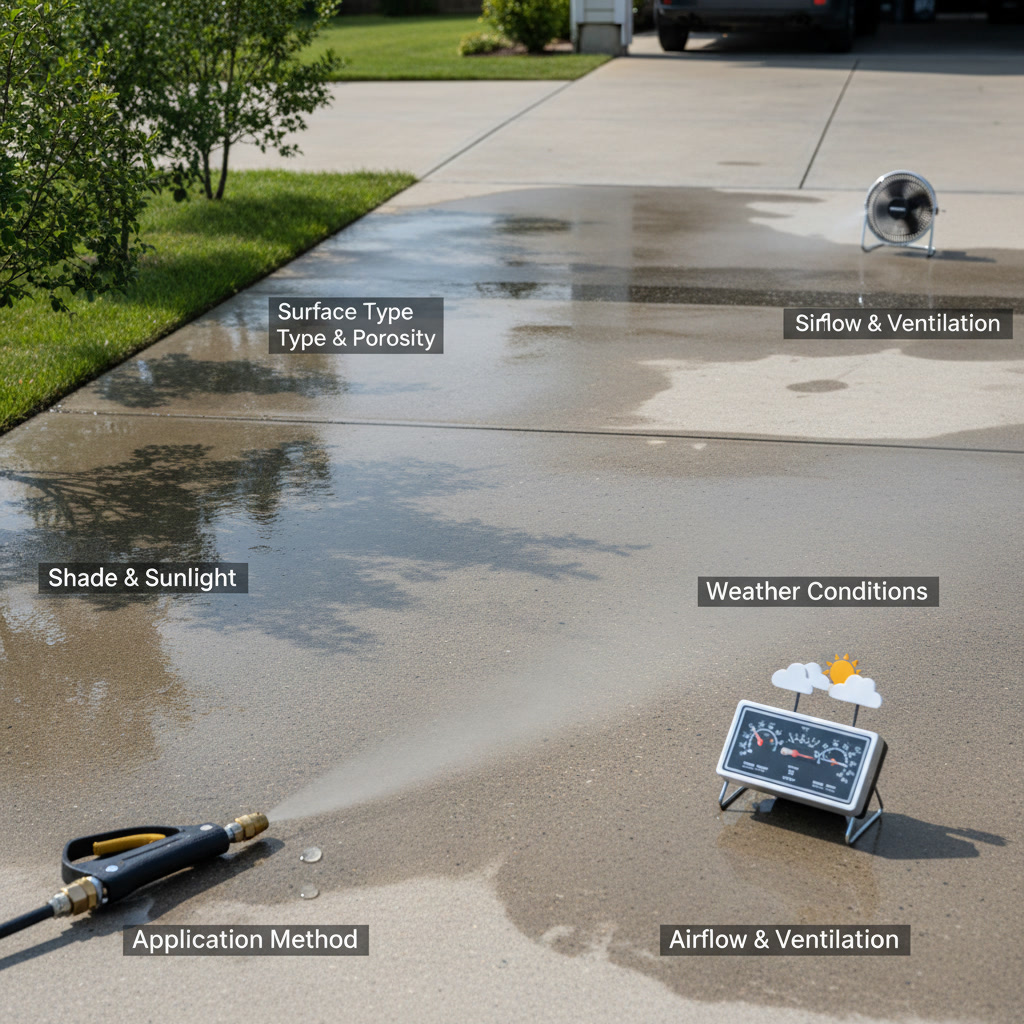
Five Factors That Control Drying Time After Softwashing
Several environmental and material factors determine how long your driveway stays wet after cleaning.
- Temperature: Warmer air holds more moisture and accelerates evaporation. A driveway cleaned on a 90-degree afternoon will dry faster than one cleaned on a cool, overcast morning.
- Humidity: High relative humidity slows evaporation. In Central Florida, humidity levels often exceed 70 percent, which can extend drying times significantly.
- Sunlight: Direct sun heats the concrete surface and drives moisture upward. Shaded driveways or those facing north may stay wet for twice as long.
- Airflow: A light breeze helps carry evaporated moisture away from the surface. Driveways surrounded by fences, hedges, or buildings dry more slowly.
- Concrete age and porosity: Older, more porous concrete absorbs and retains more water. Newer, denser surfaces release moisture faster.
How Softwashing Protects Your Concrete Long-Term
The real value of softwashing is not immediate drying but sustained cleanliness. By killing organic growth at the root, the treatment prevents regrowth for six to 12 months or longer. This contrasts sharply with pressure washing, which often requires repeat service every few months.
Softwashing also minimizes surface wear. High-pressure water can erode the top layer of concrete, exposing aggregates and creating a rough texture that traps dirt and accelerates future staining. Low-pressure application preserves the integrity of the surface while still delivering a thorough clean. For more details on how this process works, read our guide on how softwash driveway cleaning protects concrete.
When to Be Concerned About Prolonged Wetness
While extended wetness is normal after softwashing, there are a few scenarios where prolonged dampness warrants attention. If your driveway remains visibly wet for more than 48 hours in warm, sunny conditions, the concrete may have drainage issues or subsurface water intrusion unrelated to the cleaning.
Puddles that persist in the same spot can indicate low areas, settlement, or poor grading. Standing water can also attract dirt and organic matter, undoing some of the benefits of cleaning. If you notice recurring wet spots days after service, consider consulting a concrete contractor to assess drainage and grading.
How Softwashing Fits Into a Complete Exterior Maintenance Plan
Driveways are just one piece of your property’s exterior. The same softwash process that cleans concrete can also restore patios, fences, roofs, and siding. Combining driveway and sidewalk cleaning with patio cleaning and house washing creates a unified look and extends the life of all your exterior surfaces.
Regular softwash maintenance reduces the need for costly repairs. Clean surfaces shed water more effectively, resist staining, and do not support the biological growth that can degrade concrete, wood, and masonry over time. Scheduling annual or bi-annual service keeps your property looking its best and protects your investment.
Expert Insight on Drying and Post-Cleaning Expectations
One detail many homeowners overlook is that the visible wetness on the surface is only part of the story. The cleaning solution continues working below the surface even after the top layer appears dry. Sodium hypochlorite has a residual effect that keeps killing spores and bacteria for hours after application. This is why softwashed surfaces often look even cleaner a day or two after service than they do immediately after rinsing.
Professional softwash technicians understand this delayed action and time their applications accordingly. Applying treatment in the early morning allows the solution to work throughout the day, with the surface drying by evening. Cleaning late in the day, especially in humid conditions, can leave the driveway wet overnight, which some homeowners find inconvenient but does not harm the concrete or reduce effectiveness.
Trusting the Process and Seeing Long-Term Results
A damp driveway after professional cleaning is not a defect. It is evidence that the treatment has penetrated the concrete and is doing its job. The moisture you see is the solution working its way through the pores, breaking down contaminants, and preparing to evaporate naturally. Patience during the drying phase leads to months of clean, algae-free surfaces that require less frequent maintenance.
Understanding why your driveway stays wet longer helps you set realistic expectations and appreciate the thoroughness of the softwash method. The next time you see your freshly cleaned driveway still glistening hours later, you will know that deep cleaning is happening beneath the surface.
If you are ready to experience the difference that professional softwashing makes for your driveway, patio, or entire property, J’s Softwash is here to help. We serve homeowners and property managers throughout Central Florida with the same honest, hardworking approach that built our business from the ground up. Give us a call at +14078073092 to schedule your cleaning and see how a deeper clean delivers lasting results.