Hard water stains on driveways appear as white or grayish chalky deposits that resist normal cleaning methods. Unlike dirt that washes away with water or algae that scrubs off with brushing, mineral stains bond to concrete surfaces and require specialized treatment. Identifying the difference between hard water stains driveway issues and organic growth helps you choose the right cleaning approach and avoid wasting time on methods that won’t work.
Why Florida Driveways Show More Mineral Deposits Than Other Regions
Central Florida’s groundwater contains high concentrations of calcium, magnesium, and limestone. When sprinkler systems overspray onto concrete surfaces or rainwater evaporates, these minerals stay behind. Over weeks and months, the deposits build up in layers that create the stubborn white film homeowners mistake for soap residue or paint overspray.
Properties near lakes or retention ponds face even higher mineral exposure. Irrigation wells pull water from limestone aquifers, concentrating the mineral content that eventually transfers to your driveway every time the sprinklers run.
The Visual Difference Between Stains and Organic Growth
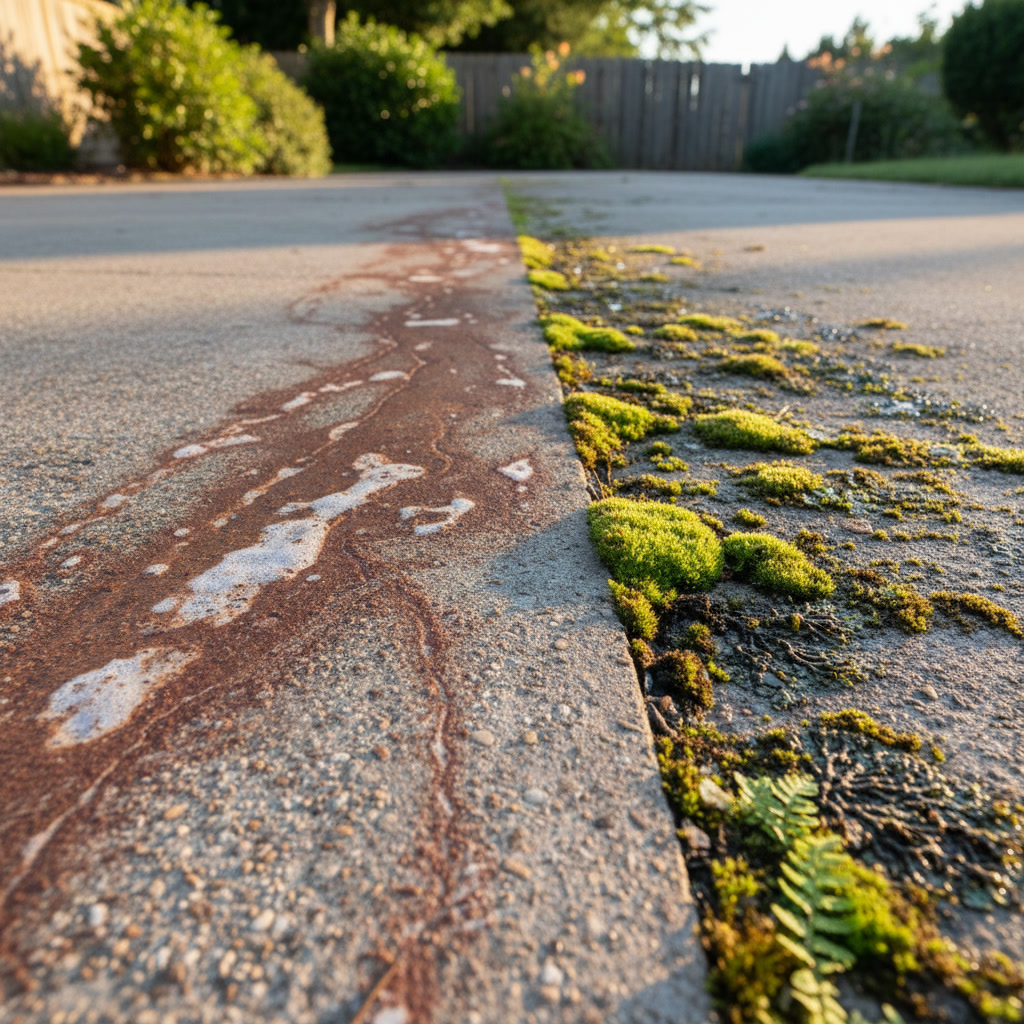
Algae and mildew appear green, black, or dark gray. They grow in shaded areas where moisture lingers, creating slippery patches with a slightly fuzzy or slimy texture. These organic materials sit on top of the concrete surface rather than penetrating it.
Mineral deposits show up as white, light gray, or rust-colored streaks and patches. The texture feels chalky or gritty when you run your hand over it. Hard water stains concentrate along the edges where sprinkler patterns overlap or where water pools and evaporates repeatedly. You’ll often see distinct lines that match your irrigation zones.
The Simple Water Test That Reveals the Real Problem
Spray a small section of the stained area with your garden hose. If the discoloration darkens when wet but returns to white as it dries, you’re looking at mineral buildup. Dirt typically rinses away or at least lightens significantly with water pressure alone.
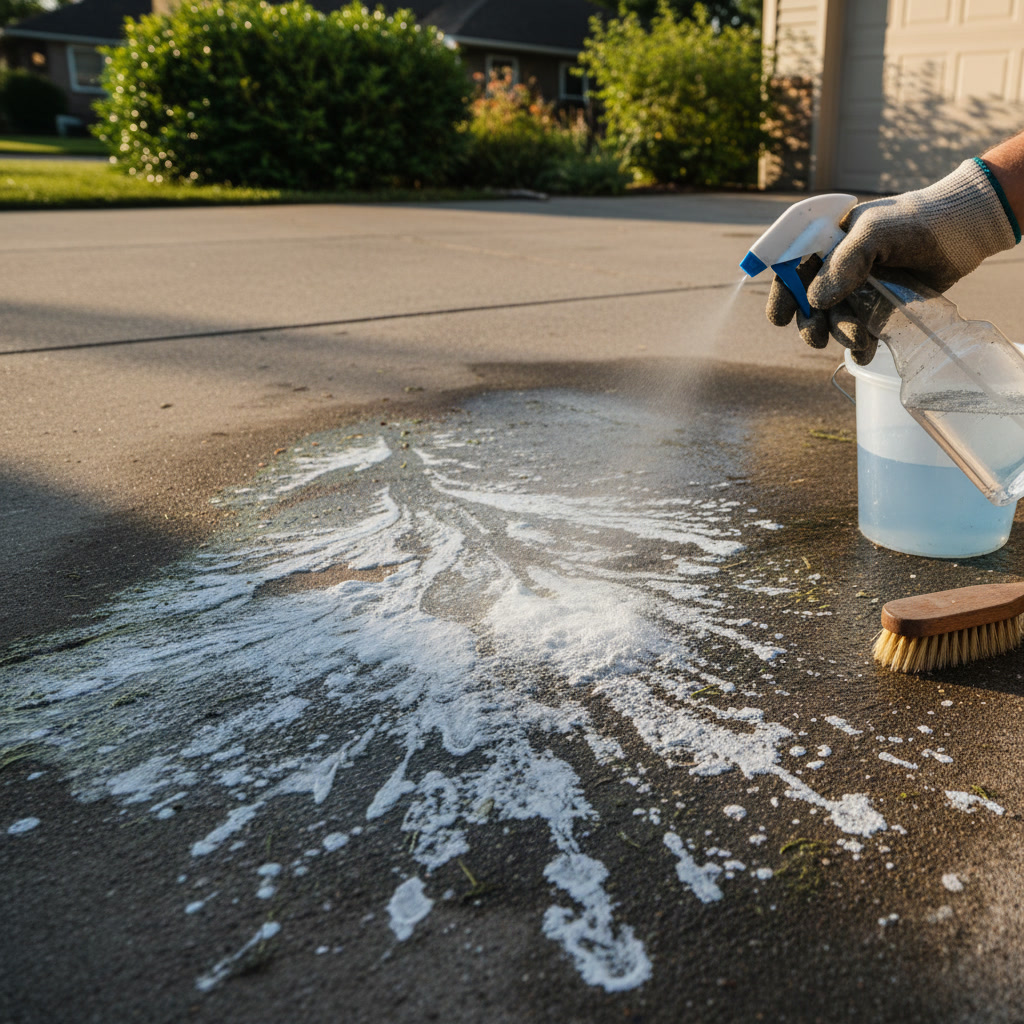
For a more definitive test, scrub a small spot with dish soap and a stiff brush. Organic growth will break down and wash away with this method. Mineral deposits remain unchanged because soap can’t dissolve the calcium and magnesium bonds.
How Sprinkler Systems Create Concentrated Staining in Orlando
Most Central Florida homes run irrigation systems two to three times per week. Each cycle delivers hundreds of gallons of mineral-rich water. When sprinkler heads aren’t properly adjusted, overspray hits driveways, walkways, and patios instead of staying on the lawn.
The sun evaporates the water within minutes, but the minerals remain. This cycle repeats hundreds of times per year, layering deposit upon deposit until the buildup becomes visible. Corner properties and homes with wells typically show the worst staining because of higher mineral concentrations.
Why Standard Pressure Washing Fails on Mineral Buildup
Water pressure alone, even at 3,000 PSI, can’t break the chemical bonds between minerals and concrete. Pressure washing may remove surface dirt that sits on top of the stains, making them more visible rather than eliminating them. Many homeowners report their driveways look worse after a basic pressure wash because the contrast becomes more obvious.
The key difference between pressure washing and softwashing approaches lies in the chemical treatment that precedes the rinse. Mineral stains require acidic solutions that dissolve the calcium and magnesium before any mechanical cleaning takes place.
The Three-Stage Process Professional Cleaners Use
Proper mineral stain removal starts with surface preparation. Loose dirt and debris get cleared away first to expose the full extent of the staining. This step prevents contaminants from interfering with chemical treatments.
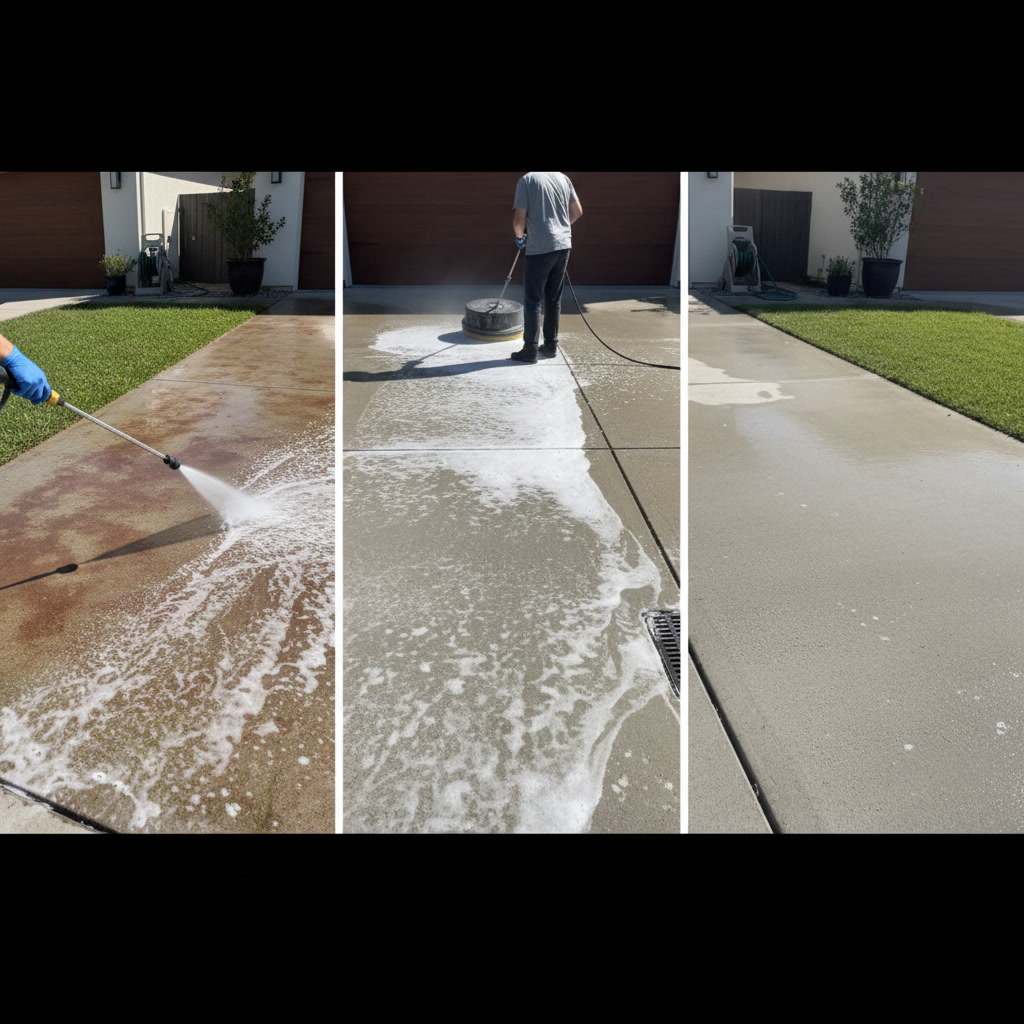
Next comes the application of pH-balanced acids designed specifically for concrete. These solutions need dwell time, typically 10 to 15 minutes, to penetrate the mineral layers and break them down. Rushing this step leaves partial staining that returns quickly.
The final rinse uses controlled water pressure to flush away the dissolved minerals without damaging the concrete surface. Temperature, pressure, and spray angle all matter in this stage. Too much force can etch the concrete, while too little leaves residue behind.
When Rust Stains Mix With Hard Water Deposits
Iron in your water supply creates orange or brown staining that often appears alongside white mineral buildup. These rust marks require different chemical treatments than calcium deposits. A single cleaning solution won’t address both problems effectively.
Properties with well water or older plumbing systems show the most rust staining. The iron oxidizes on contact with air, bonding to concrete just as stubbornly as calcium. Professional rust removal services use chelating agents that target iron specifically without affecting surrounding surfaces.
Prevention Strategies That Actually Work Long Term
Adjusting sprinkler heads to eliminate overspray cuts new mineral deposits by 80 percent or more. Walk your property while the system runs and mark any heads that spray beyond the lawn. Most hardware stores sell deflector shields that redirect the water without requiring full sprinkler replacement.
Applying a penetrating concrete sealer after professional cleaning creates a barrier that slows mineral absorption. The sealer won’t prevent all staining, but it makes future cleaning easier and extends the time between treatments. Reapply every two to three years for best results.
What Homeowners Get Wrong About DIY Acid Treatments
Big-box store muriatic acid seems like an affordable solution, but improper dilution rates and application methods cause more problems than they solve. Too strong a mixture etches concrete, creating a rough texture that traps more dirt and minerals. Too weak a solution wastes time and materials without removing the stains.
Safety concerns multiply when homeowners mix acids without proper ventilation or protective equipment. Acid fumes damage lungs and eyes, while skin contact causes chemical burns. The runoff also kills landscaping and contaminates storm drains if not contained correctly.
How Climate and Sun Exposure Affect Stain Severity
Driveways that face south or west receive more direct sunlight, accelerating water evaporation and concentrating mineral deposits. Shaded areas stay damp longer, promoting algae growth instead. This creates a mixed-stain scenario where different sections of the same driveway need different treatments.
Florida’s rainy season from June through September adds another variable. Heavy afternoon storms wash away some surface minerals while delivering fresh deposits in other areas. Understanding these seasonal patterns helps you time professional cleanings for maximum effectiveness and longer-lasting results.
Getting Your Driveway Back to Its Original Appearance
Mineral stains don’t signal permanent damage to your concrete. The calcium and magnesium sit on the surface rather than penetrating deep into the material. With the right treatment approach, even heavily stained driveways return to their original color and texture.
The time investment matters more than the product cost. J’s Softwash has refined the process of identifying, treating, and preventing mineral deposits across hundreds of properties in Central Florida. Our approach combines the chemistry knowledge to dissolve stains safely with the equipment calibration that protects your concrete during cleaning.
If your driveway shows white or chalky staining that won’t wash away with normal cleaning methods, mineral deposits are the likely cause. Professional treatment removes these stains completely and sets up prevention strategies that keep them from returning quickly. Reach out to J’s Softwash at +14078073092 to schedule an assessment and get your concrete surfaces looking clean again.