
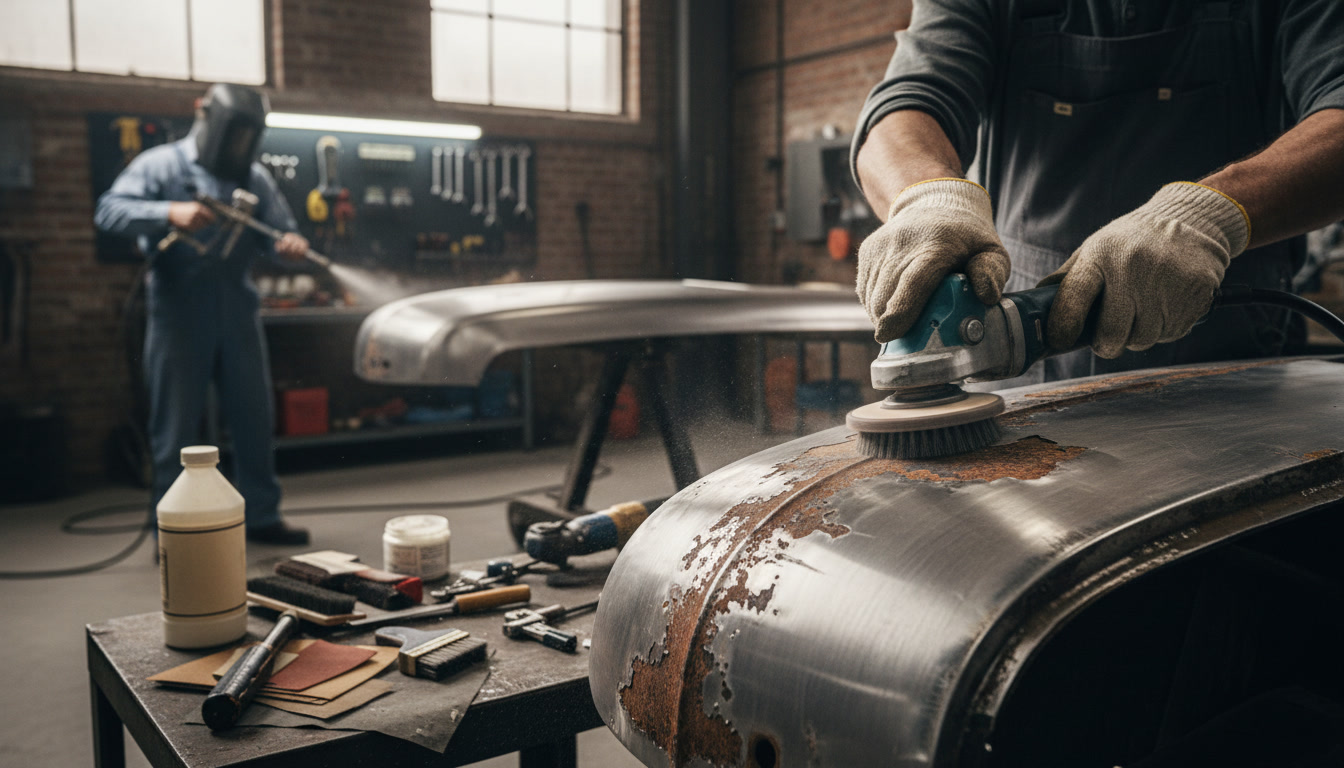
Rust stains can appear on driveways, patios, fences, and siding, leaving unsightly orange marks that seem impossible to remove. Some rust stains respond well to household products and elbow grease, while others demand professional-grade chemicals and equipment to avoid permanent damage. DIY rust removal is effective for light surface rust on small areas, but deep-set stains or large affected zones typically require professional treatment to avoid etching surfaces or worsening the discoloration.
Why Rust Stains Appear on Exterior Surfaces
Rust develops when iron or steel oxidizes after exposure to moisture and air. Common culprits include lawn fertilizers with high iron content, metal patio furniture, rusted lawn equipment, irrigation system components, and fasteners embedded in concrete. These sources leach iron particles onto concrete, pavers, stucco, and vinyl siding during rain or irrigation cycles.
Once iron particles settle into porous surfaces, they bond chemically with the material. Concrete and natural stone are especially vulnerable because their porous structure allows iron oxide to penetrate below the surface layer. Surface-level cleaning products cannot reach these embedded particles, which is why many homeowners find that scrubbing alone produces little to no improvement.
Common Household Products That Work for Light Rust
For fresh, surface-level rust stains smaller than a dinner plate, several household products can deliver results. White vinegar contains acetic acid that dissolves light rust on non-porous surfaces like metal railings or painted siding. Apply it undiluted, let it sit for 10 to 15 minutes, then scrub with a stiff nylon brush.
Lemon juice combined with table salt creates a mild abrasive paste that works on small rust spots on concrete or brick. The citric acid breaks down iron oxide while the salt provides gentle scrubbing action. This method requires repeated applications and works best in direct sunlight, which accelerates the chemical reaction.
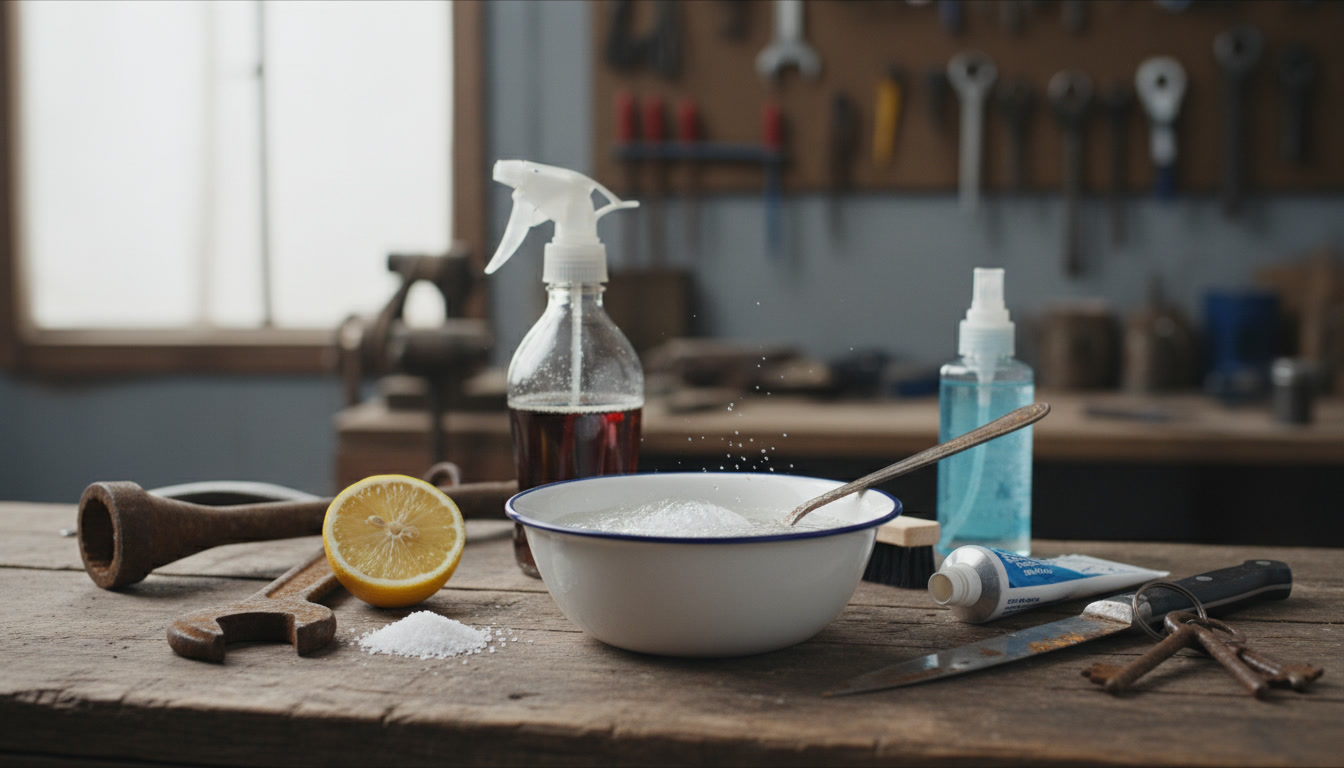
Baking soda mixed with water into a thick paste can lift very light rust from painted metal surfaces. Apply the paste, let it sit for 30 minutes, and scrub with a soft cloth. This approach is safe for delicate finishes but lacks the strength to tackle anything beyond superficial discoloration.
When DIY Methods Fall Short on Concrete and Pavers
Concrete driveways and paver patios present unique challenges because their porous surfaces trap iron oxide deep within the material. Household acids like vinegar lack the concentration needed to penetrate more than a millimeter or two below the surface. Stains that have been present for weeks or months typically require oxalic acid or hydrofluoric acid-based cleaners, both of which carry significant safety risks when handled improperly.
Scrubbing with a wire brush can worsen rust stains on concrete by embedding iron particles deeper into the surface or leaving metal fragments that create new rust spots. Pressure washing alone pushes water into the pores without dissolving the iron oxide, often spreading the stain across a larger area. This is one reason why many homeowners who attempt removing rust stains from concrete driveways without proper products see limited success.
The Risks of Using Strong Acids Without Training
Professional-grade rust removers contain concentrated acids that dissolve iron oxide effectively but can also etch concrete, discolor pavers, kill landscaping, and cause chemical burns on skin contact. Oxalic acid, a common ingredient in commercial rust removers, requires precise dilution ratios and proper application techniques to avoid damaging the surface you are trying to clean.
Hydrofluoric acid, used for severe rust stains on masonry, is extremely hazardous. It penetrates skin without immediate pain, causing deep tissue damage that may not become apparent for hours. Improper disposal of acid runoff can harm grass, plants, and aquatic life in storm drains. Most municipalities regulate the use and disposal of these chemicals, and violating those rules can result in fines.
Step-by-Step Safe DIY Approach for Small Rust Stains in Orlando
If you decide to tackle a small rust stain yourself, follow these steps to maximize safety and effectiveness. First, identify the stain source and remove it. A rusted planter, metal furniture leg, or corroded sprinkler head will continue creating new stains until you eliminate the iron source.
Second, test your chosen product on an inconspicuous area. Apply a small amount of cleaner to a hidden spot, wait 24 hours, and check for discoloration or surface damage. This step prevents costly mistakes on visible areas.
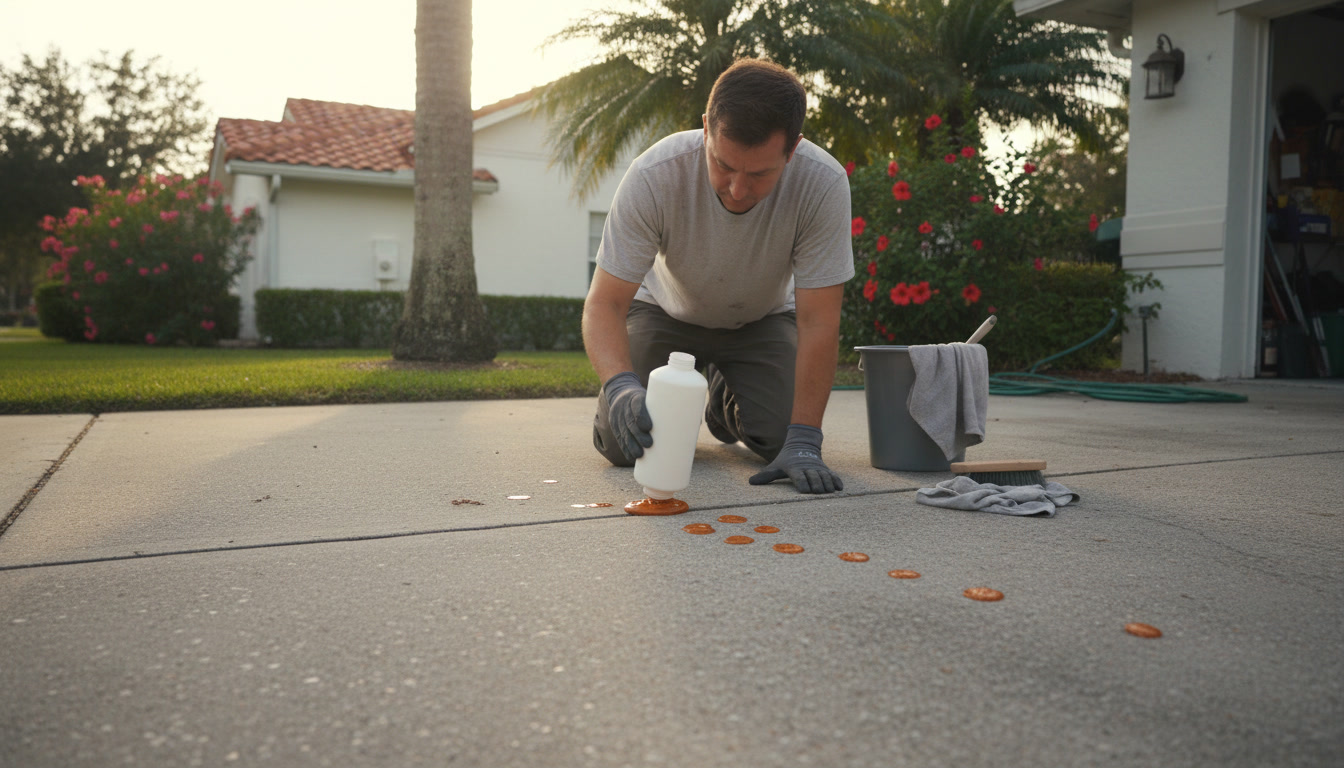
Third, apply the cleaner according to product directions, using protective gloves and eyewear. Work in a well-ventilated area or outdoors. Scrub gently with a nylon brush, rinse thoroughly with water, and inspect the results. If the stain persists after two applications, professional treatment is the smarter choice.
Fourth, neutralize any acidic cleaner with a baking soda and water solution to prevent ongoing chemical reactions with the surface. Rinse again and allow the area to dry completely before assessing whether additional treatment is needed.
When Rust Affects Large Areas or Multiple Surfaces
Rust stains covering more than a few square feet, or stains that appear across multiple surfaces like driveways and sidewalks, signal a systemic issue that DIY methods cannot efficiently address. Fertilizer overspray, irrigation system corrosion, or metal roof runoff can create widespread staining that requires specialized equipment and bulk-grade chemicals to treat effectively.
Professional exterior cleaning companies use low-pressure application systems that distribute rust removers evenly across large areas, ensuring consistent dwell time and preventing streaking. They also carry liability insurance that covers accidental damage to property or landscaping, a protection homeowners lack when working with hazardous chemicals themselves.
Rust on Vertical Surfaces and Delicate Materials
Rust stains on fences, siding, and stucco require different treatment than horizontal concrete surfaces. Gravity causes cleaners to run quickly down vertical surfaces, reducing dwell time and effectiveness. Applying thick gel-based rust removers helps, but these products are expensive and difficult to source in retail stores.
Delicate materials like vinyl siding, painted wood, and aluminum can be permanently damaged by strong acids. Professional technicians adjust chemical concentrations and application methods based on the substrate, using neutralizing agents and protective barriers to safeguard surrounding materials. Attempting these adjustments without training often results in discolored siding, stripped paint, or etched metal.
The True Cost Comparison Between DIY and Professional Service
A gallon of consumer-grade rust remover costs between 15 and 30 dollars and typically covers 100 to 200 square feet depending on stain severity. Treating a standard two-car driveway (approximately 600 square feet) requires three to four gallons, plus brushes, protective gear, and disposal fees for chemical waste. Total cost often exceeds 100 dollars, and that assumes the products work on the first application.
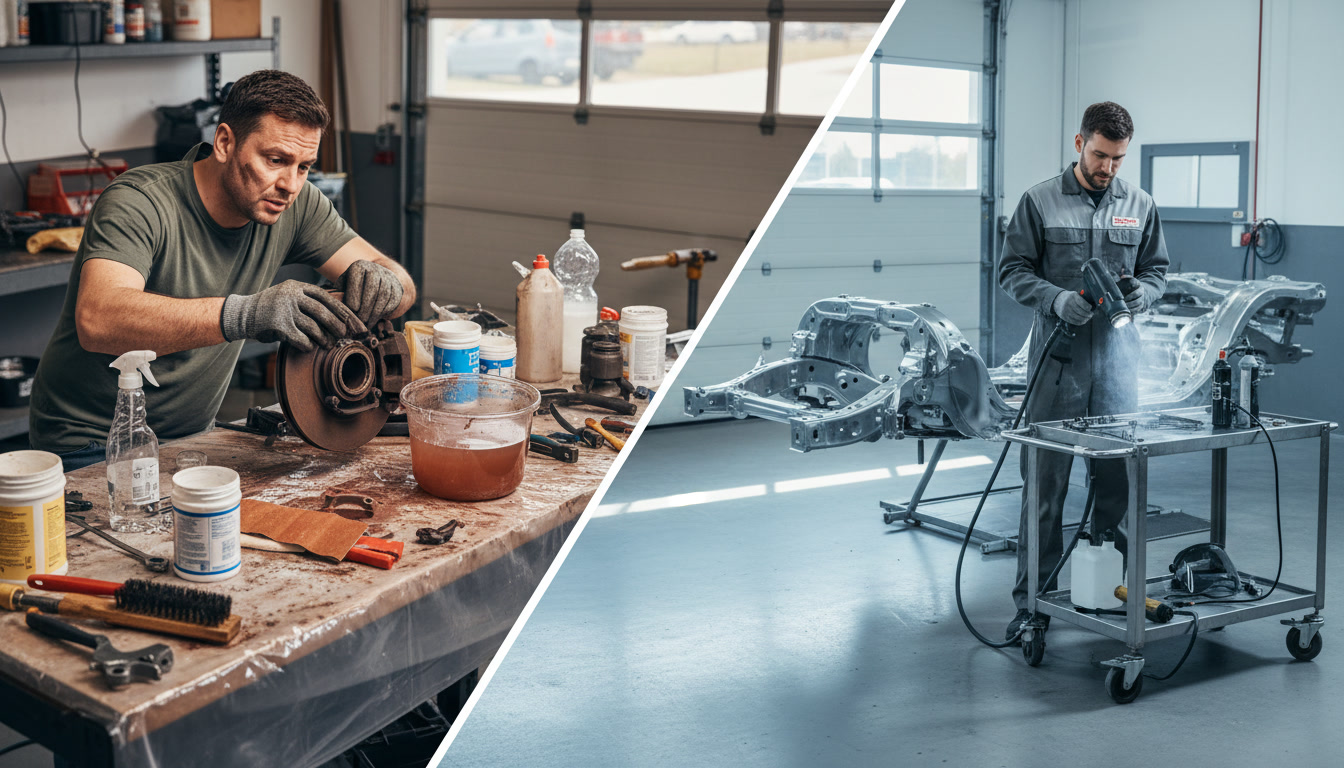
Professional rust removal service pricing varies by surface area and stain severity but includes labor, commercial-grade chemicals, equipment, and guaranteed results. When factoring in the time spent researching products, making multiple store trips, applying treatments, and the risk of surface damage from improper technique, professional service often delivers better value and peace of mind.
How Professionals Prevent Rust Stains from Returning
One advantage of professional treatment is the inclusion of preventive measures that DIY approaches overlook. After removing rust stains, technicians often apply sealers to concrete and pavers that reduce porosity and make future stains easier to clean. They also identify and advise on the iron sources causing the staining, such as recommending iron-free fertilizers or relocating metal fixtures.
Regular maintenance plans that include patio cleaning and driveway treatments can catch rust stains early, when they are still responsive to lighter chemicals and shorter treatment times. This proactive approach saves money over time by preventing deep-set stains that require aggressive intervention.
Knowing When to Stop and Call for Help
If you have applied a rust remover twice without visible improvement, continuing will likely waste money and risk damaging the surface. Persistent stains indicate that iron oxide has penetrated too deeply for surface treatments to reach, or that the stain is not actually rust but a different type of discoloration that requires alternative cleaning methods.
Similarly, if the stained area is near landscaping, pools, or decorative features you want to protect, professional application minimizes the risk of collateral damage. Trained technicians use containment barriers, neutralizing rinses, and precise application tools that most homeowners do not own or know how to use effectively.
Making the Right Choice for Your Property
Light, fresh rust stains on small, non-porous surfaces are the sweet spot for DIY treatment. If the stain appeared within the last week, covers less than one square foot, and sits on a surface that is not highly visible or difficult to replace, household products may deliver acceptable results. Any scenario outside those parameters tips the scale toward professional service.
Deep stains, large affected areas, delicate materials, and recurring rust issues all benefit from the expertise, equipment, and guarantees that come with hiring a trained exterior cleaning company. The investment protects your property value and saves the frustration of repeated failed attempts.
J’s Softwash has treated rust stains on driveways, patios, fences, and siding across Central Florida since our first days knocking on doors with equipment loaded in a Volkswagen Jetta. We use professional-grade products and proven techniques to remove even stubborn stains without damaging your surfaces. If you are dealing with rust stains that DIY methods cannot handle, reach out at +14078073092 to schedule an assessment and get your exterior surfaces looking clean again.


