Different roof materials demand different cleaning strategies. When cleaning asphalt vs tile roofs, the safest method depends on the material’s durability, porosity, and how it reacts to water pressure and chemical cleaners. Asphalt shingles typically respond best to low-pressure softwashing with specialized algaecides, while tile roofs can tolerate slightly more pressure but still require careful technique to avoid cracking or displacing tiles.
Why Roof Material Dictates the Cleaning Approach
Asphalt shingles are made from a fiberglass or organic mat coated with asphalt and topped with ceramic granules. These granules protect the underlying layers from UV damage and weathering. High-pressure washing strips away these protective granules, shortening the roof’s lifespan by years and voiding most manufacturer warranties.
Tile roofs, whether clay or concrete, are denser and more rigid. They don’t shed protective layers the same way shingles do, but they are brittle. A direct hit from a pressure washer or walking carelessly across tiles can crack them. Tiles also overlap in a specific pattern, and dislodging one can create leaks or allow wind-driven rain to penetrate the underlayment.
How Asphalt Shingle Roofs Should Be Cleaned
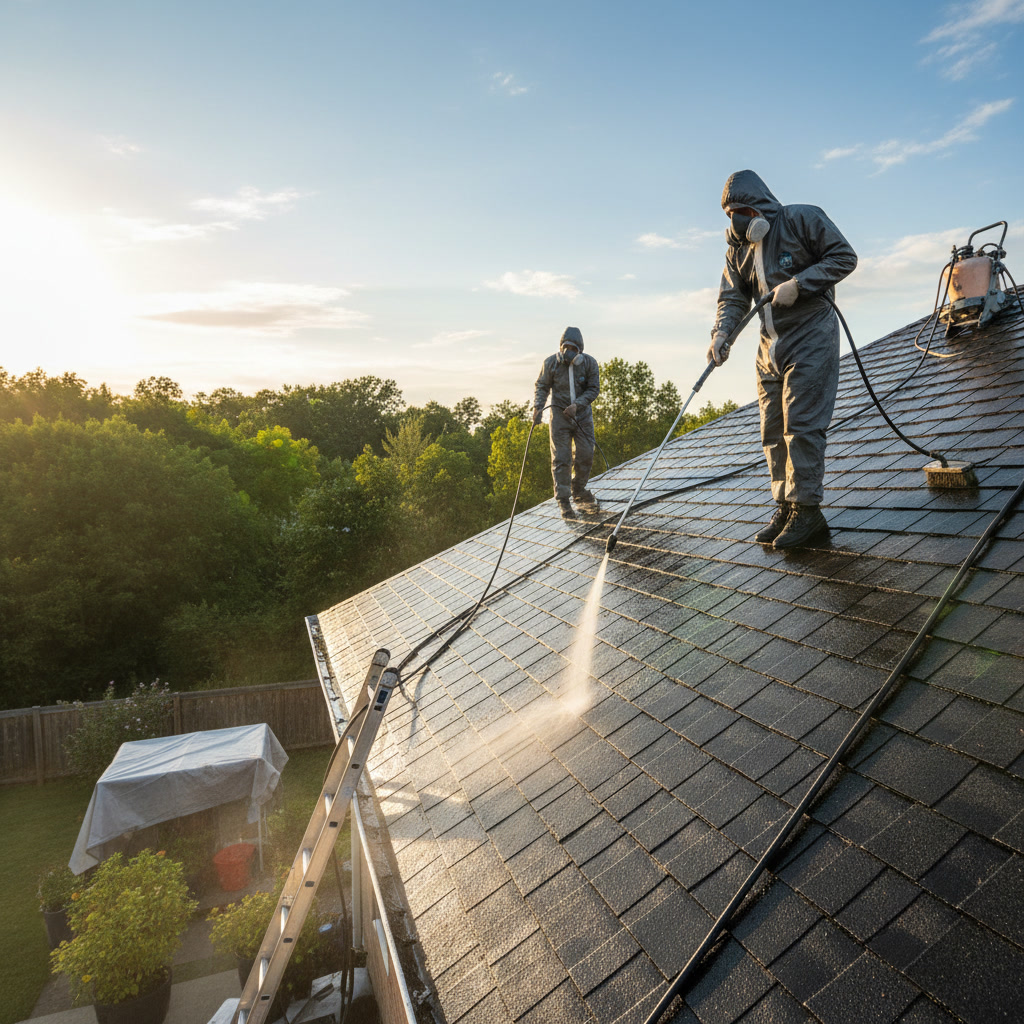
Softwashing is the industry-standard method for asphalt shingles. This process uses a low-pressure spray system to apply a biodegradable cleaning solution that kills algae, moss, and lichen at the root. The solution typically contains sodium hypochlorite and surfactants designed to cling to the roof surface long enough to break down organic growth.
The key advantage of softwashing is that it never exceeds 100 PSI, far below the threshold that damages shingles. Most garden hoses deliver water at around 40 to 60 PSI, so the application feels gentler than rinsing your car. The chemical does the work, not the water pressure. After the solution dwells for 10 to 20 minutes, a gentle rinse removes dead algae and residue without disturbing the granules.
One expert-level insight: many homeowners see black streaks reappear within months after a cheap roof cleaning. That happens when contractors use diluted bleach without a proper surfactant or algaecide. The streaks you see are a cyanobacteria called Gloeocapsa magma, and it has a waxy protective coating. Without a surfactant to break that coating, the bleach only lightens the surface. A professional roof cleaning service uses the correct mix to eliminate the organism, not just bleach it.
The Right Way to Clean Tile Roofs in Orlando
Tile roofs in Central Florida face constant exposure to humidity, which accelerates moss and lichen growth. Because tiles are more durable than asphalt, some contractors use pressure washers set between 1,200 and 1,500 PSI. This can work if applied correctly, but the margin for error is small. Too much pressure or the wrong nozzle angle can chip edges, crack tiles, or blow out the mortar holding ridge caps in place.
A safer approach combines low-pressure softwashing with manual scrubbing where needed. The cleaning solution loosens the organic matter, and a soft-bristle brush or surface cleaner removes stubborn patches without impact force. This method takes longer but preserves the tile’s integrity and avoids the risk of hidden micro-cracks that lead to leaks years later.
Comparing Pressure Limits and Chemical Compatibility
Asphalt shingles should never be cleaned with more than 100 PSI. Tile roofs can handle up to 1,500 PSI in experienced hands, but most professionals stay below 800 PSI to minimize risk. The difference is not just about durability but also about how each material bonds with the cleaning agent.
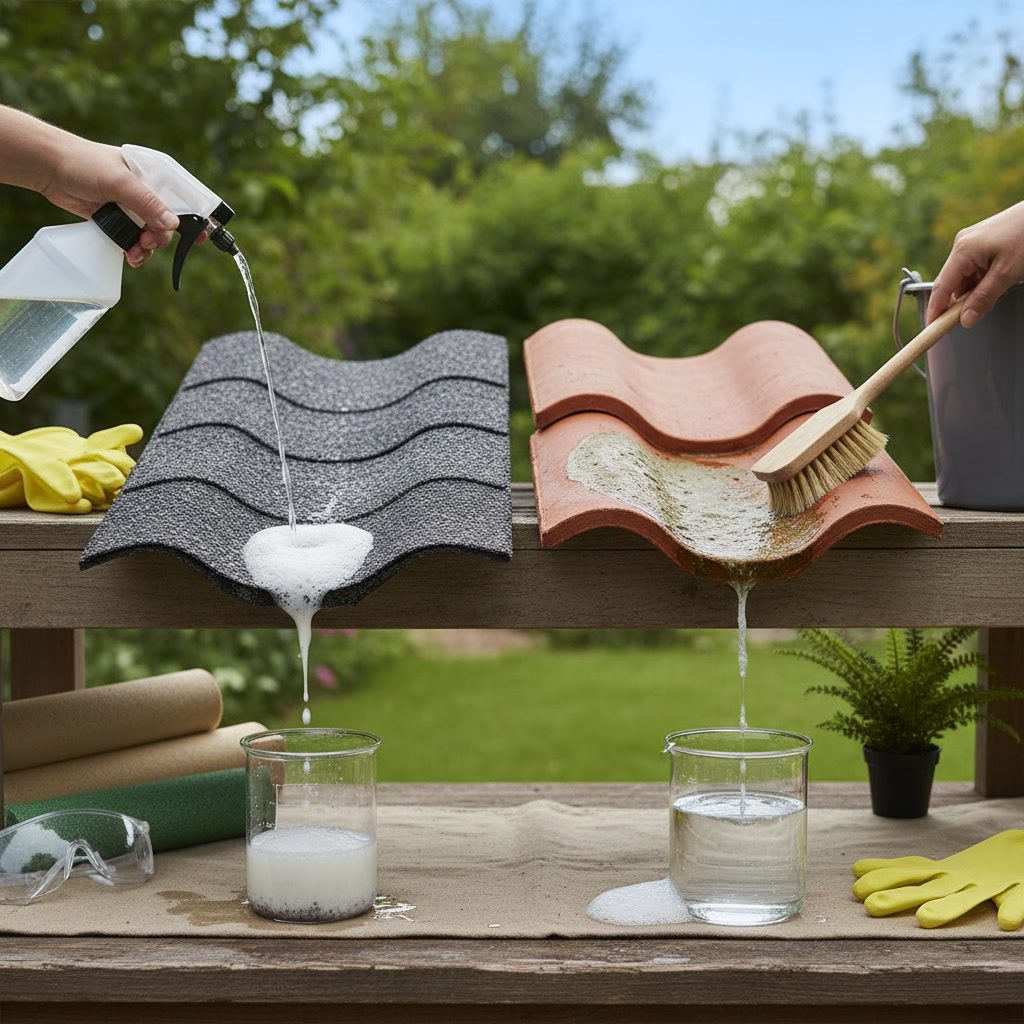
Asphalt shingles are porous and absorb the softwash solution, allowing it to penetrate and kill algae beneath the surface. Tile is less porous, so the solution works primarily on the surface. That means tile roofs often need a second application or longer dwell time to achieve the same level of cleanliness. Both materials are compatible with sodium hypochlorite-based cleaners, but tile roofs may also benefit from oxygen bleach or enzyme-based treatments when dealing with heavy lichen growth.
Common Mistakes That Damage Roofs During Cleaning
Using a pressure washer on asphalt shingles is the most common error. Even at 1,000 PSI, the force is enough to strip granules, creating bald spots that age the roof prematurely. Another mistake is walking directly on tiles without proper footwear or weight distribution. Tiles can crack under point loads, especially older clay tiles that have become brittle.
Skipping the rinse step is another problem. Leaving cleaning chemicals on the roof can corrode metal flashing, discolor paint on fascia boards, or harm landscaping below. A thorough rinse also washes away dead organic matter, preventing it from clogging gutters or staining siding. Similar care applies when handling other exterior surfaces, which is why understanding the difference between methods matters across services like house washing.
When to Choose Professional Cleaning Over DIY
Roof height, pitch, and condition all factor into whether a DIY approach makes sense. A single-story home with a low-slope asphalt shingle roof might be manageable for a confident homeowner with the right equipment. A two-story tile roof with a steep pitch and heavy moss growth is a job for professionals who carry liability insurance and use fall-protection gear.
Professional services also have access to commercial-grade cleaning solutions that are more effective and faster-acting than retail products. They know how to adjust chemical concentration based on roof age, stain severity, and surrounding vegetation. That level of precision protects your investment and delivers results that last years, not months.
How Often Each Roof Type Needs Cleaning
Asphalt shingle roofs in humid climates like Central Florida typically need cleaning every two to three years. Black algae streaks appear sooner on north-facing slopes or sections shaded by trees because those areas stay damp longer. Tile roofs can often go three to five years between cleanings, but that window shortens if moss or lichen takes hold.
Regular cleaning extends roof life by preventing organic growth from trapping moisture against the surface. On asphalt shingles, trapped moisture accelerates granule loss and can lead to rot in the underlying decking. On tile roofs, moss roots can work into the pores and cause surface spalling, where the outer layer flakes off.
What Homeowners in Winter Park and Surrounding Areas Should Know
Central Florida’s climate creates ideal conditions for roof algae and moss. High humidity, frequent afternoon rain, and mild winters mean roofs rarely get a break from moisture. Homeowners in Winter Park and nearby communities often notice black streaks within 18 months of a new roof installation.
The algae spores are airborne and spread from roof to roof, so even a brand-new shingle roof can develop streaks if neighboring homes have untreated growth. That makes regular cleaning a neighborhood issue as much as an individual one. Tile roofs see slower algae growth but are more prone to moss in shaded areas, particularly along roof valleys where debris collects.
Chemical Solutions and Environmental Considerations
Sodium hypochlorite is effective but requires careful handling to protect plants and waterways. Professional cleaners pre-wet landscaping, cover sensitive plants with tarps, and rinse thoroughly to dilute runoff. Some services offer plant-safe alternatives that use hydrogen peroxide or surfactant-based formulas, though these may require more frequent applications.
Tile roofs can sometimes be cleaned with oxygen bleach, which is gentler on plants but slower to break down organic stains. The trade-off is longer dwell times and the need for manual scrubbing. For homeowners concerned about chemical use, discussing options with a knowledgeable provider is the best path forward.
Protecting Your Roof Investment Long-Term
Routine cleaning is only part of roof maintenance. Trimming overhanging branches reduces shade and limits the debris that traps moisture. Keeping gutters clear prevents water backup that can seep under shingles or tiles. Inspecting flashing and seals around vents and chimneys catches small problems before they become expensive repairs.
Both asphalt and tile roofs benefit from annual visual inspections, ideally before hurricane season. Look for missing granules, cracked tiles, lifted shingles, or moss patches. Addressing these issues early preserves the roof’s structural integrity and keeps your home protected through Florida’s intense summer storms.
Choosing the Method That Matches Your Roof
Asphalt shingles demand a gentle, chemical-based approach that removes algae without disturbing the protective granule layer. Tile roofs allow slightly higher pressure but still require careful technique to avoid cracks and displacement. Understanding the material under your feet is the first step toward a cleaning process that keeps your roof functional and attractive for decades.
Whether you have asphalt shingles showing black streaks or tile suffering from moss buildup, the right cleaning method protects your investment and restores curb appeal. Professional services bring the expertise, equipment, and safety measures that turn roof cleaning from a risky chore into a reliable maintenance routine.
J’s Softwash serves homeowners across Central Florida with roof cleaning solutions tailored to your specific material and condition. If your roof needs expert care, reach out at +14078073092 to schedule an assessment and get your home looking its best.