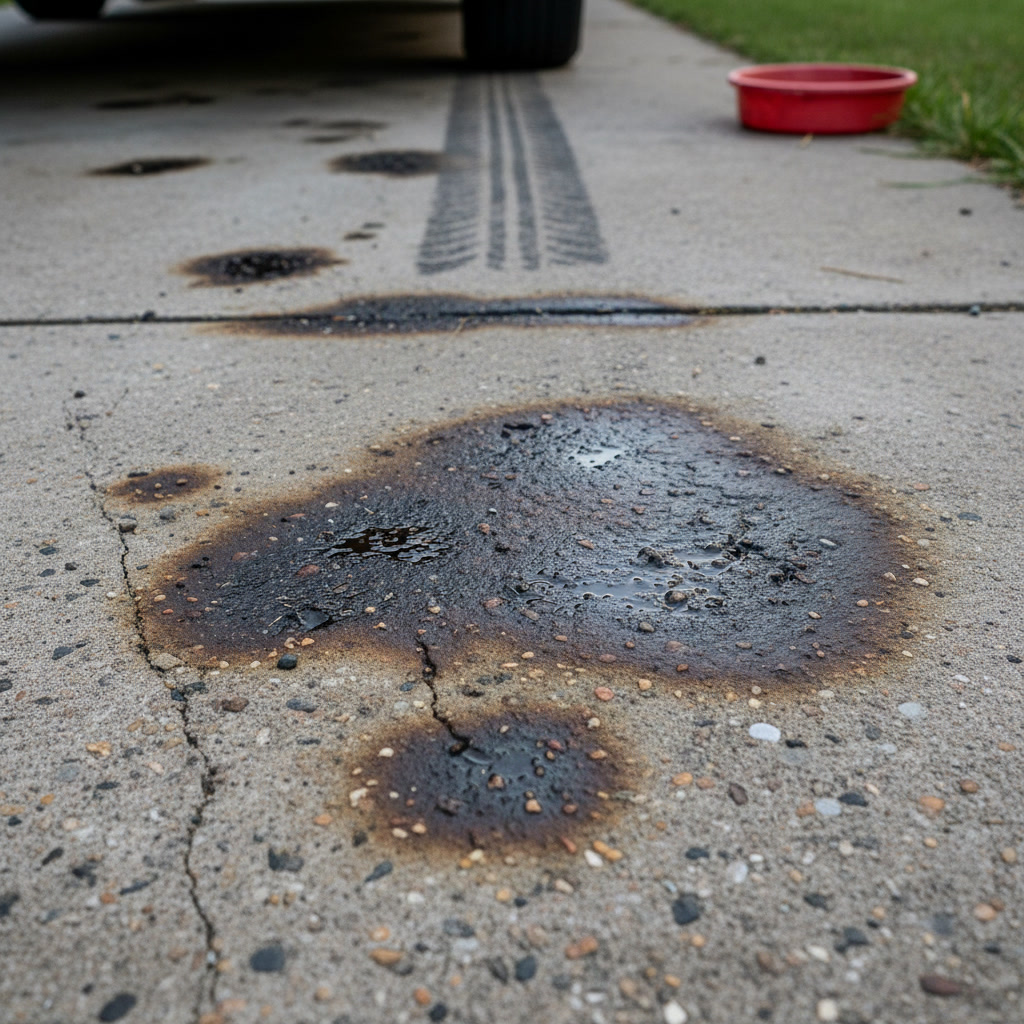
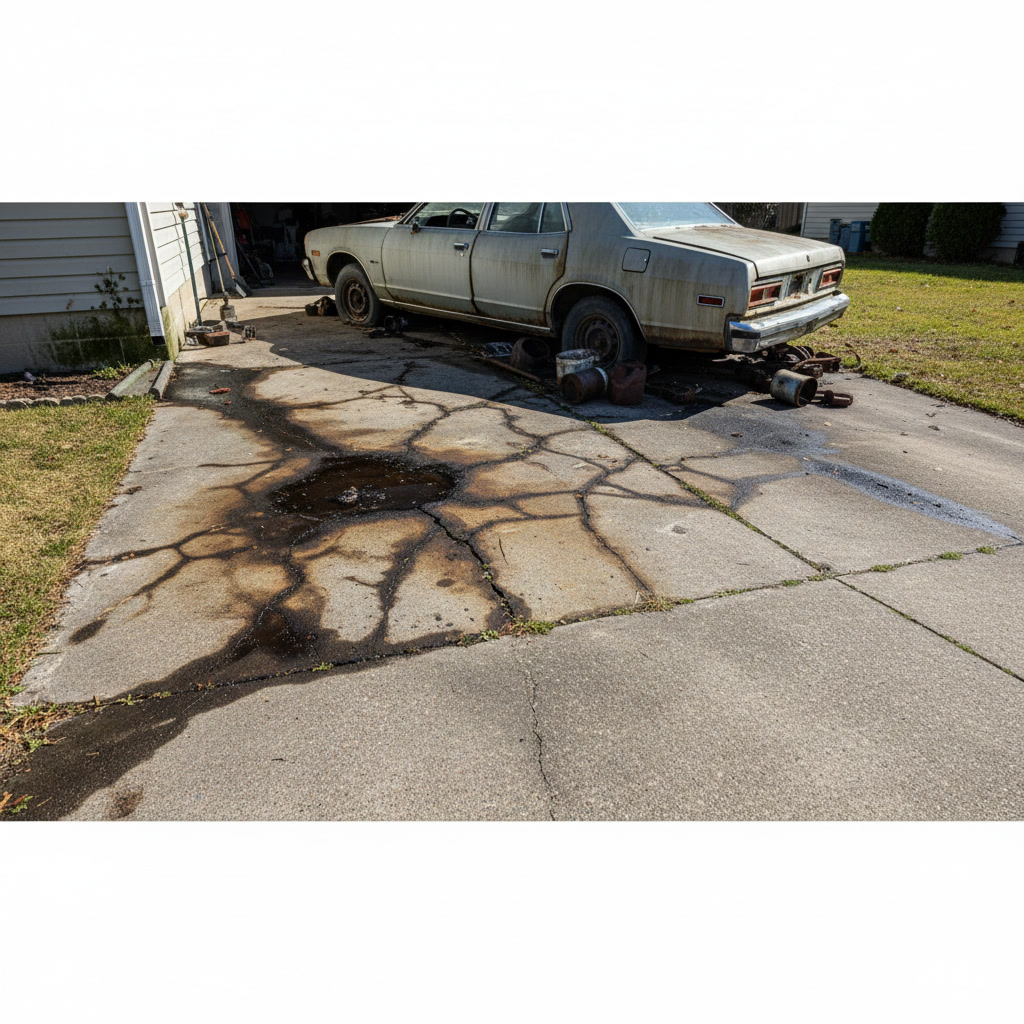
Oil stains on driveways form when petroleum-based fluids from vehicles seep into the porous surface of concrete or asphalt. Unlike surface dirt, oil penetrates deep into the material, creating a bond that resists standard cleaning methods. These stains require specialized degreasers, heat, and chemical treatments that break down the petroleum molecules at their source. Without proper intervention, the stains spread and become permanent.
Why Vehicle Fluids Leave Behind Stubborn Marks
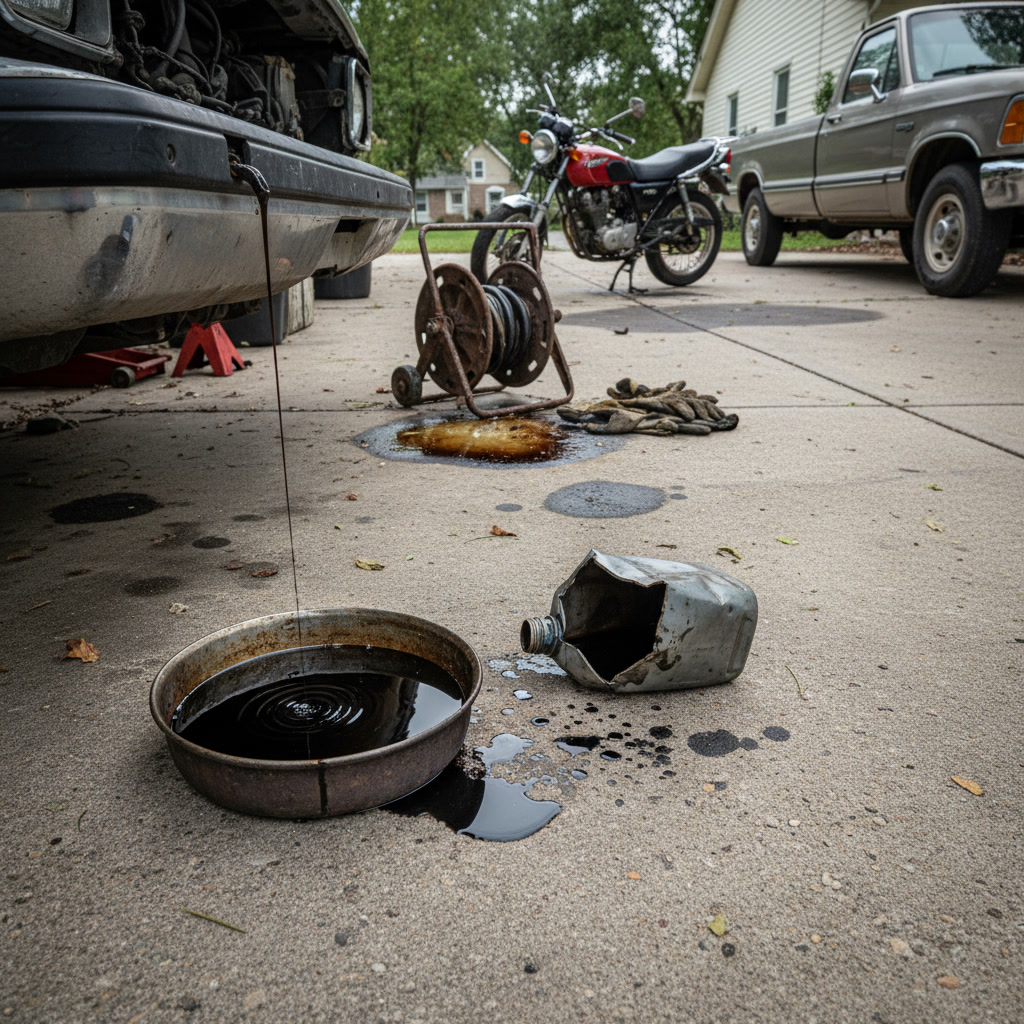
Your driveway encounters a variety of automotive fluids throughout its lifetime. Engine oil, transmission fluid, power steering fluid, and brake fluid all contain hydrocarbon compounds that behave differently from water-based stains. When these fluids drip onto concrete or asphalt, gravity and capillary action pull them deeper into the material’s microscopic pores.
Concrete is especially vulnerable because of its naturally porous structure. The average concrete driveway has thousands of tiny air pockets per square inch, created during the curing process. These pockets act like sponges, drawing oil downward sometimes as deep as a quarter inch or more. Once the oil settles below the surface, it bonds with the cement paste and aggregate, creating a stain that soap and water cannot touch.
The Chemistry Behind Petroleum Penetration
Oil and water do not mix because petroleum molecules are hydrophobic, meaning they repel water. This chemical property makes oil stains impossible to remove with pressure washing alone. The molecular structure of engine oil allows it to slip between concrete particles and adhere to the calcium silicate hydrate that gives concrete its strength.
As the oil oxidizes over time, it darkens and hardens. Fresh oil might appear amber or brown, but after weeks of exposure to sunlight and oxygen, it turns black and takes on a tar-like consistency. This oxidation process actually strengthens the bond between the oil and the concrete, making older stains significantly harder to remove than fresh spills.
Common Sources of Driveway Oil Contamination
Most homeowners assume oil stains come only from major leaks, but even small drips add up over time. A vehicle that loses just three drops of oil per day will deposit more than 1,000 drops over the course of a year. These accumulate in the same parking spot, creating a concentrated stain that spreads outward as rain and tire pressure push the oil across the surface.
Lawn equipment contributes to the problem as well. Mowers, leaf blowers, and pressure washers often leak small amounts of fuel or two-stroke oil mix. When you store these items on your driveway or use them nearby, the residue transfers to the concrete. Even parking a hot engine over dry leaves can cause natural oils to leach onto the pavement.
Why Standard Cleaning Methods Fail on Oil in Orlando
Central Florida’s climate makes oil stain removal even more challenging. High temperatures cause concrete to expand, opening pores wider and allowing oil to penetrate deeper. Summer heat can raise surface temperatures above 140 degrees, which liquefies old oil deposits and spreads them further across the driveway.
Humidity adds another complication. When moisture in the air condenses on a cool concrete surface early in the morning, it forms a barrier that prevents cleaning solutions from reaching the oil. This is why many store-bought degreasers produce disappointing results in humid environments. The product sits on top of a moisture film instead of soaking into the stain.
Professional Treatment Methods That Actually Work
Effective oil stain removal requires a multi-step process that addresses both surface contamination and subsurface penetration. Professional services begin with a heated alkaline degreaser that raises the pH level of the concrete, breaking the molecular bonds between oil and cement. The elevated temperature accelerates the chemical reaction, allowing the degreaser to dissolve petroleum compounds that have hardened over months or years.
After the initial chemical treatment, technicians use specialized surface cleaners that combine heat, pressure, and continuous degreaser application. These machines maintain consistent contact with the stain while rotating jets scrub the surface at close range. The combination of chemical action and mechanical agitation pulls oil from deep within the concrete pores. For driveways in need of comprehensive restoration, professional driveway cleaning services offer the equipment and expertise to handle stubborn contamination.
The Role of Poultice Applications for Deep Stains
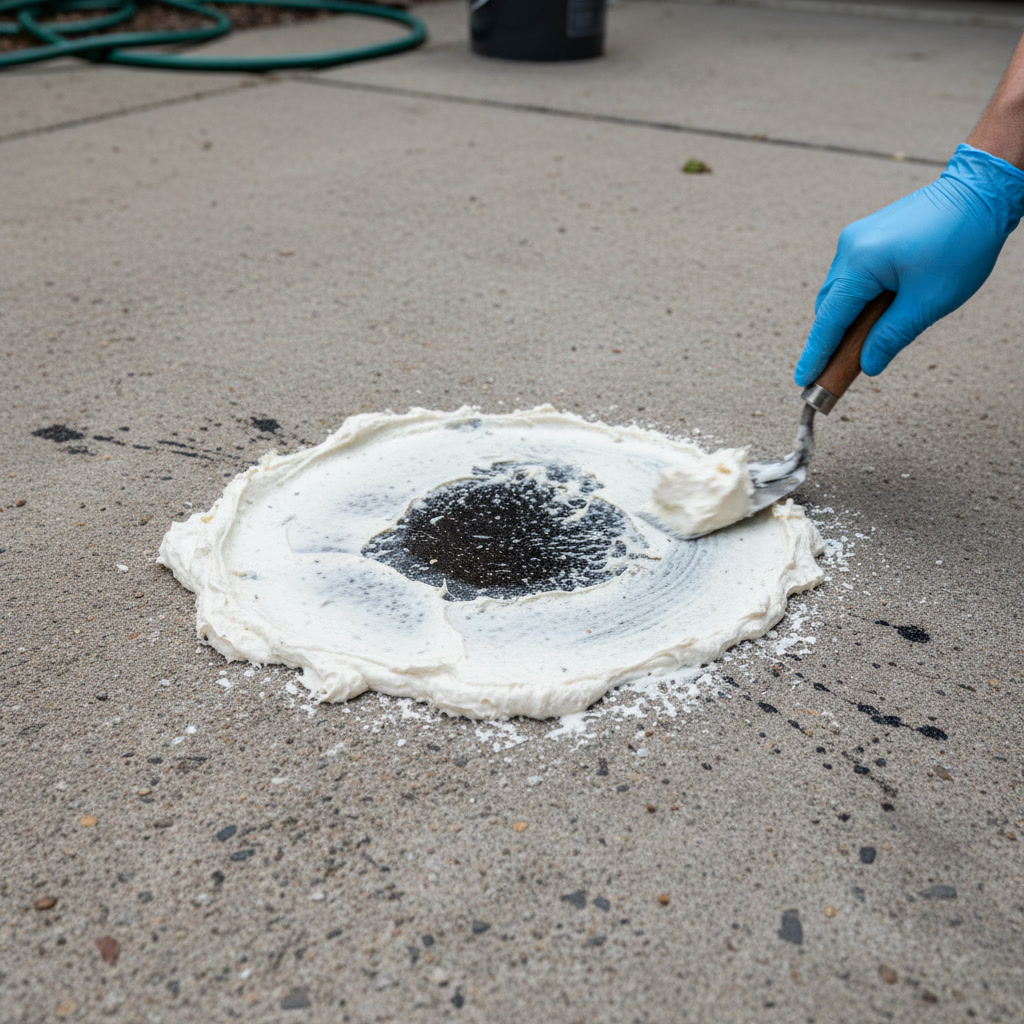
Some oil stains penetrate so deeply that surface cleaning alone cannot remove them. In these cases, professionals apply an absorbent poultice made from clay, diatomaceous earth, or specially formulated powder mixed with a solvent. This paste draws oil out of the concrete through a process similar to how a charcoal mask pulls impurities from skin.
The poultice sits on the stain for 24 to 48 hours, covered with plastic to prevent premature drying. As the solvent dissolves the oil, capillary action pulls the contaminated liquid into the absorbent material. Once the poultice dries, it is swept away, taking the oil with it. This method works particularly well on older stains that have oxidized and hardened below the surface.
How Oil Damage Differs Between Concrete and Asphalt
Concrete and asphalt respond differently to oil contamination. Concrete absorbs oil into its pores but maintains structural integrity because the cement binder is not petroleum-based. Asphalt, however, contains bitumen, which is itself a petroleum product. When fresh oil contacts asphalt, it softens the binder and breaks down the material’s cohesion.
This creates a different type of problem. Oil stains on asphalt often cause the surface to become mushy or crumbly. You might notice a depression forming where vehicles park regularly, or the aggregate stones becoming loose and scattered. While concrete stains are primarily cosmetic, asphalt stains can compromise the structural integrity of the driveway and require repair beyond cleaning.
Prevention Strategies That Reduce Future Staining
Sealing your driveway creates a protective barrier that prevents oil from penetrating the surface. Concrete sealers fill the pores with acrylic or epoxy resins, giving you a window of time to clean up spills before they soak in. A properly sealed driveway allows you to remove fresh oil with absorbent materials and simple detergent within the first few hours of a spill.
Regular maintenance extends the life of your sealer. Most concrete sealers require reapplication every two to three years, depending on traffic and exposure. If you also have decorative pavers around your property, paver sealing services provide the same protective benefits and help maintain a uniform appearance across all hardscaped areas.
Parking mats offer another layer of protection. These heavy-duty mats sit beneath your vehicle and catch drips before they reach the concrete. They work especially well if you have an older vehicle with known leaks or if you perform oil changes in your driveway. The mats are washable and reusable, making them a cost-effective long-term solution.
The Hidden Costs of Ignoring Oil Stains
Beyond appearance, untreated oil stains create safety hazards. Oil residue becomes slippery when wet, increasing the risk of falls on your driveway or sidewalk. This is particularly dangerous during Florida’s frequent afternoon rain showers, when a light layer of water mixes with surface oil to create a slick film.
Property value takes a hit as well. Real estate agents consistently report that homes with stained driveways photograph poorly and create negative first impressions during showings. Buyers often interpret visible stains as evidence of deferred maintenance, leading them to question what other issues might be lurking. The cost of professional cleaning is minimal compared to the potential reduction in sale price or increased time on market.
When to Call Professionals for Oil Stain Removal
Some homeowners attempt DIY oil stain removal with varying results. Store-bought degreasers work on fresh, surface-level stains if applied immediately. However, once a stain has aged beyond a few weeks or penetrated deeper than surface level, professional equipment becomes necessary. The heated water and commercial-grade chemicals used by exterior cleaning companies achieve results that consumer products cannot match.
Professional services also save time and prevent damage. Incorrect use of harsh chemicals or excessive pressure can etch concrete, strip sealer, or create uneven cleaning patterns that look worse than the original stain. Experienced technicians understand the right combination of temperature, pressure, dwell time, and chemical strength for each specific situation. Understanding the difference between pressure washing and softwashing methods helps you choose the right approach for your driveway’s material and condition.
Protecting Your Investment With Regular Maintenance
Oil stains represent just one category of driveway contamination. Mold, mildew, tire marks, and rust all contribute to the gradual deterioration of your concrete surfaces. A comprehensive maintenance schedule addresses these issues before they become permanent. Annual or biannual professional cleaning removes contaminants, refreshes the appearance, and extends the lifespan of your driveway by preventing chemical damage to the concrete itself.
J’s Softwash serves homeowners throughout Orlando and surrounding communities with specialized treatments for oil contamination and other driveway issues. The company understands that different stains require different approaches, and brings the right tools and expertise to each job. Regular cleaning as part of broader exterior maintenance services keeps your entire property looking its best year-round.
Taking Action on Stubborn Driveway Stains
Oil stains do not disappear on their own, and the longer they remain, the harder they become to remove. The combination of chemical penetration, oxidation, and environmental factors turns what starts as a small drip into a permanent mark that detracts from your home’s appearance and value. Professional treatment breaks down these stubborn stains at the molecular level, restoring your driveway to a clean, safe condition.
If your driveway shows signs of oil contamination or other staining that resists standard cleaning methods, J’s Softwash offers the specialized equipment and experience needed to address the problem correctly. Serving Central Florida with honest, reliable service, the company treats every property with the same attention to detail that built the business from the ground up. Call +14078073092 to schedule an assessment and learn how professional treatment can restore your driveway’s appearance and protect your investment for years to come.