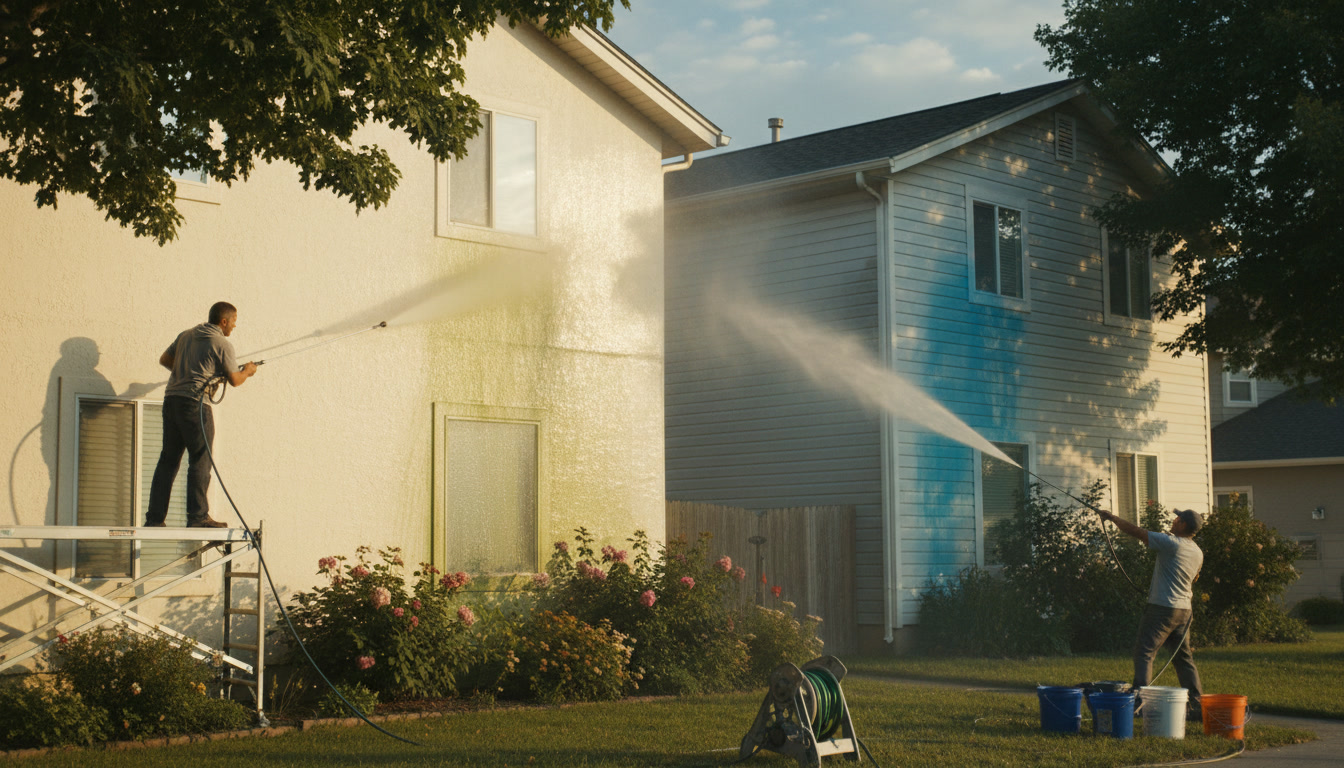
Professional patio cleaning involves an initial assessment, furniture removal, surface preparation, application of cleaning solutions, low-pressure washing, and a thorough final rinse. Most jobs take two to four hours depending on size, soil level, and surface type. The process protects your surfaces while removing years of organic growth, dirt, and staining.
Why Your Patio Needs More Than a Garden Hose
A garden hose and scrub brush might remove loose dirt, but they leave behind the embedded organic growth that causes long-term damage. Algae, mold, and mildew grow deep into concrete, pavers, and natural stone. They break down surfaces over time and create slippery safety hazards. Surface-level rinsing does not remove these contaminants or prevent them from returning within weeks.
Professional cleaning addresses the root cause. It uses targeted solutions and controlled water pressure to clean without etching concrete or dislodging paver sand. The result lasts months longer than DIY attempts and preserves the structural integrity of your outdoor living space.
The Initial Site Assessment Before Work Begins
Every job starts with a walkthrough. The technician identifies your patio material, checks for existing damage, notes any staining patterns, and examines drainage. This step determines which cleaning agents are safe, what pressure settings are appropriate, and whether pre-treatment is necessary.
The assessment also includes surrounding areas. Landscaping, adjacent walls, windows, and outdoor fixtures all factor into the plan. A thorough inspection prevents surprises and ensures the team brings the right equipment and solutions for your specific surface.
Furniture Removal and Clearing the Work Area
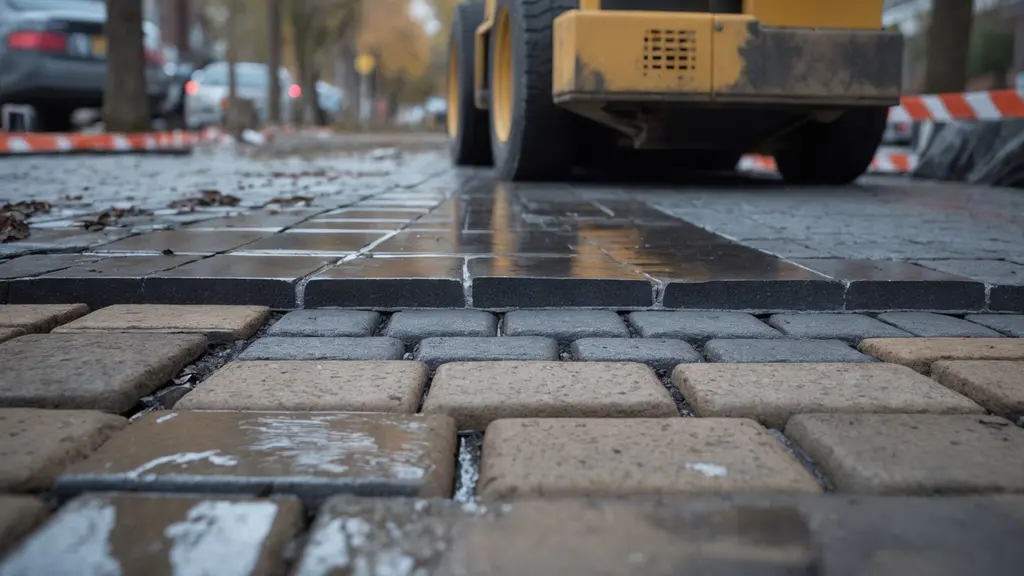
Clearing the patio is the first hands-on step. Technicians move furniture, planters, grills, and decorations to a safe, dry location away from the cleaning zone. Heavier items like stone benches or large tables are relocated strategically to allow section-by-section cleaning without multiple moves.
This step protects your belongings and gives full access to the surface. Trapped dirt and staining often hide under furniture that hasn’t moved in months. Moving everything reveals the true condition of the patio and ensures uniform cleaning across the entire area.
If you have items you prefer to move yourself or pieces that require extra care, communicate that during scheduling. Some homeowners handle delicate decor while the crew manages heavier outdoor furniture. For large-scale cleanouts that go beyond patio furniture, Junk removal services can handle unwanted items at the same time.
Surface Preparation and Pre-Treatment in Orlando
Before any water hits the patio, the surface gets swept or blown clean of loose debris. Leaves, dirt, and sand are removed so the cleaning solution can penetrate rather than mix with surface grime. This step is especially important in Central Florida, where pollen, sand, and organic debris accumulate quickly.
Pre-treatment comes next. A specialized cleaning agent is applied to the entire surface. The formulation depends on the material and the type of contamination. Algae-heavy pavers need different chemistry than oil-stained concrete. The solution sits for a controlled dwell time, typically 10 to 15 minutes, breaking down organic growth and loosening embedded dirt.
How Cleaning Solutions Target Algae and Mold
The cleaning agents used in professional patio cleaning are surfactant-based or enzymatic formulas designed to kill organic growth at the root. Unlike bleach, which can discolor surfaces and harm plants, professional-grade solutions are pH-balanced and biodegradable when used correctly.
These products work by breaking down the cell structure of algae, mold, and mildew. The dwell time allows the solution to penetrate porous surfaces like concrete and natural stone, reaching growth below the visible layer. This approach prevents regrowth for several months and eliminates the black or green discoloration that returns quickly after pressure-only cleaning.
The Low-Pressure Washing Process Step by Step
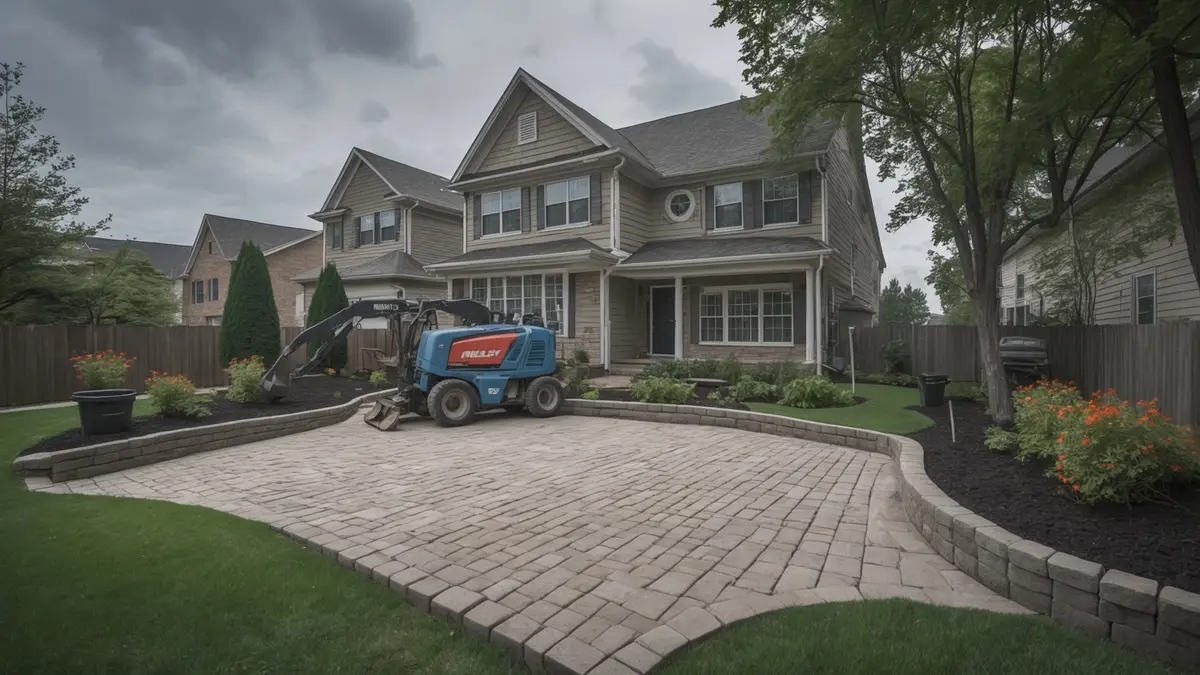
Once the pre-treatment has worked, the rinse begins. Contrary to popular belief, effective Patio cleaning rarely requires high pressure. Most surfaces respond best to low-pressure washing, typically between 500 and 1,200 PSI, paired with high water volume.
The technician starts at the highest point and works downward, ensuring dirty water flows away from clean areas. Each pass overlaps slightly to avoid streaking. The wand is held at a consistent angle and distance to prevent surface damage. For pavers, special care is taken around joints to avoid displacing sand.
Stubborn spots get additional attention. Oil stains, rust marks, and heavy mold concentrations may require a second application or spot treatment. The goal is complete removal without aggressive scrubbing that can wear down the surface or create uneven texture.
Protecting Landscaping and Adjacent Surfaces
Professional teams take active steps to protect plants, grass, and nearby surfaces. Before cleaning starts, sensitive plants are pre-watered to dilute any solution that might drift. During the wash, runoff is directed toward drainage areas rather than flower beds.
Adjacent surfaces like siding, windows, and fences are rinsed if overspray occurs. The same care applied to House washing extends to the entire cleaning zone. Attention to detail prevents collateral damage and ensures your entire property looks better, not just the patio.
The Final Rinse and Surface Inspection
After the main wash, a thorough final rinse removes all remaining cleaning solution and loosened contaminants. This step uses clean water at low pressure, flooding the surface to carry away residue. The rinse continues until runoff is completely clear.
The technician then inspects the patio under different lighting angles. Streaks, missed spots, or remaining stains are addressed immediately. This quality check ensures the finished result meets professional standards before furniture is returned.
Drying Time and When You Can Use Your Patio Again
Concrete and pavers dry relatively quickly in Florida’s climate. Most patios are safe to walk on within two to four hours. Full furniture replacement can happen the same day, though waiting until the next morning ensures complete drying and prevents moisture transfer to furniture legs.
If you have plans for Paver sealing, the surface must be completely dry, typically 24 to 48 hours depending on humidity. Sealing too soon traps moisture and causes hazy or uneven results. Professional teams schedule sealing as a separate appointment to allow proper cure time.
Avoiding foot traffic during the first few hours also prevents tracking dirt back onto the clean surface. The investment in professional cleaning lasts longer when you give the surface time to dry and cure fully.
Why Results Last Longer Than DIY Methods
The difference between renting a pressure washer and hiring a professional comes down to technique, chemistry, and equipment calibration. Rental units often deliver inconsistent pressure and lack the adjustable nozzles needed for delicate surfaces. DIY cleaning rarely includes pre-treatment, which means surface dirt is removed but root-level growth remains.
Professional results last four to eight months on average, compared to four to six weeks for DIY attempts. The cleaning agents used by trained technicians kill spores and biofilm, delaying regrowth. Proper pressure settings prevent surface damage that accelerates future staining. When you understand the difference between pressure washing and softwashing, the value of professional service becomes clear.
What to Expect After Your Patio Is Professionally Cleaned
A professionally cleaned patio restores curb appeal, improves safety, and extends the life of your outdoor surfaces. You’ll notice the true color of your pavers or concrete, often several shades lighter than before. Slippery algae and mold are gone, reducing fall risk. The surface looks and feels renewed.
Maintenance becomes easier. Regular sweeping and occasional rinsing keep the patio looking fresh between professional cleanings. Most homeowners schedule service once or twice a year, depending on shade cover, tree proximity, and weather exposure. Setting a routine prevents buildup and avoids the need for aggressive treatments down the line.
J’s Softwash brings the same hands-on approach to every patio cleaning that built the business from the ground up. Our team serves homeowners across Central Florida with honest service and attention to detail. Whether your patio is concrete, pavers, or natural stone, we tailor the process to your surface and deliver results that last.
If your outdoor space needs a refresh, reach out to discuss your project. We’ll walk you through what to expect and provide a clear estimate with no surprises. Call (407) 807-3092 to schedule your patio cleaning and see the difference professional service makes.